

Reviewed by Amanda Lattin, ACHS Dean of Aromatherapy, and Judith Thompson, ACHS Dean of Herbal Medicine. Updated on 4/29/2026.
Does the shift from winter to spring leave your sinuses feeling a little… full? Seasonal changes, dry indoor air, and environmental irritants can all affect sinus comfort. While conventional approaches often include antibiotics or steroids, many people find supportive relief through holistic strategies that promote healthy mucus flow, moisture balance, and immune resilience.
Below, you’ll find evidence-informed natural remedies and guidance on how to safely use herbs and essential oils for nasal congestion and sinus support.
Why Holistic Sinus Support?
Sinus congestion can sometimes stem from inflammation and excess mucus in the nasal passages. Holistic approaches focus on:
- Supporting healthy mucus consistency
- Encouraging sinus drainage
- Maintaining moisture in nasal tissues
- Promoting immune system balance
1. Saline Nasal Rinse with a Neti Pot
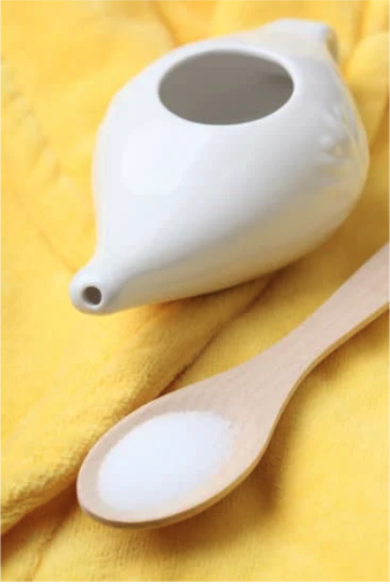 One of the simplest and most affordable sinus remedies is saline nasal irrigation.
Why It Works
Saline solution1:
- Thins mucus
- Flushes allergens and irritants
- Moisturizes nasal passages
- Supports natural ciliary function
How to Make a Neti Pot Solution
Mix:
- ½ teaspoon kosher or non-iodized salt
- 2 cups warm distilled or previously boiled (and cooled) water
- Optional: ¼ teaspoon baking soda
Important: Always use distilled, sterile, or previously boiled water to prevent infection.
How to Use
- Lean over a sink.
- Tilt your head to one side.
- Insert the spout into the upper nostril.
- Allow the solution to flow through and exit the other nostril.
- Repeat on the opposite side.
Use 1–2 times daily as needed. Clean and sterilize the neti pot after each use.
2. Essential Oils for Nasal Congestion & Sinus Support
Essential oils can be supportive when properly diluted and used safely. Below are 5 of the most commonly used oils for sinus comfort, along with their best use methods.
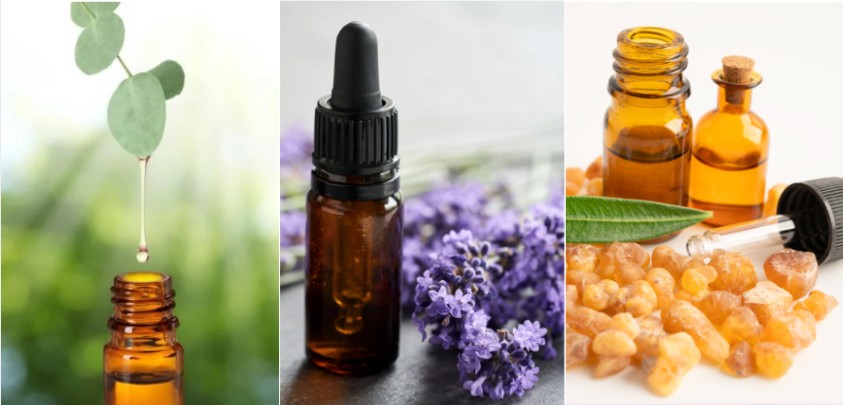
- Eucalyptus Eucalyptus globulus contains 1,8-cineole, a constituent studied for its ability to support clear breathing and sinus comfort.2 Use 1–2 drops for steam inhalation or diffuse 3–4 drops in a well-ventilated space.
- Peppermint Mentha × piperita provides a cooling sensation from menthol that may help create the perception of improved airflow.3 Dilute to 1–2% with a carrier oil for chest application or add 1 drop to a steam inhalation blend.
- Lavender Lavandula angustifolia is soothing and supports sinus comfort by promoting relaxation and balancing inflammation. Diffuse 3–5 drops or add to a gentle steam blend.
- Tea Tree Melaleuca alternifolia is valued for its cleansing properties and can support respiratory wellness aromatically. Add 1 drop to a steam inhalation blend or diffuse in moderation.
- Frankincense Boswellia carterii helps maintain deep, comfortable breathing with its warm, grounding aroma. Diffuse 3–4 drops or include in a 1–2% diluted chest blend with a carrier oil.
For a deeper dive into using essential oils safely and effectively, download the ACHS Essentials of Essential Oil Safety eBook and learn how to support sinus comfort with confidence.
3. Turmeric Ginger Tea for Sinus Comfort
Both Turmeric Curcuma longa and Ginger Zingiber officinale have been studied for their role in supporting a healthy inflammatory response and can help promote normal mucus in the nasal passages.4
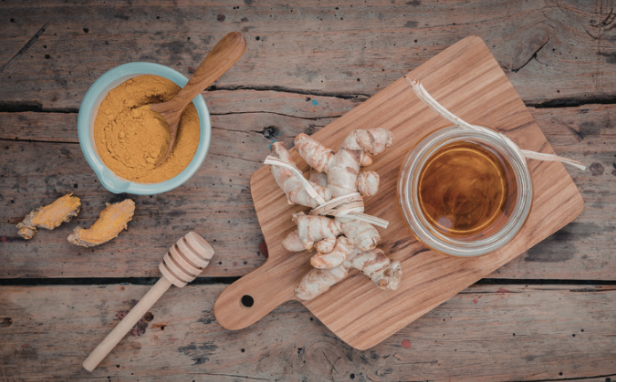
Recipe
- 8 oz hot water
- 1/2 tsp turmeric powder or fresh grated root
- 1-inch fresh-grated ginger
- Raw honey (optional)
Combine the turmeric and ginger in the hot water and steep for 5-10 minutes. Add raw honey, if desired. Sip while warm to encourage circulation and comfort.
For more soothing herbal blends like this, download the ACHS Preparing Herbal Teas eBook and discover simple, science-informed recipes to support wellness naturally.
Additional Holistic Sinus Support Tips
- Stay Hydrated: Adequate hydration supports mucus regulation and sinus pressure balance.
- Use a Humidifier: Dry indoor air can irritate nasal tissues. Consider adding 2–3 drops of eucalyptus or lavender to a diffuser (not directly into humidifier tanks unless manufacturer-approved).
- Support Nutritional Wellness: Focus on:
- Vitamin C–rich foods (citrus, kale, strawberries)
- Zinc sources (pumpkin seeds, spinach, cashews)
- Colorful fruits and vegetables
Holistic sinus care can be both gentle and effective when grounded in research and used safely. Saline rinses, targeted essential oils, herbal teas, hydration, and nutrition together can create a supportive approach to seasonal sinus discomfort.
Sources:
- Harvey, R., Hannan, S. A., Badia, L., & Scadding, G. (2007). Nasal saline irrigations for the symptoms of chronic rhinosinusitis. The Cochrane database of systematic reviews, (3), CD006394. https://doi.org/10.1002/14651858.CD006394.pub2
- Kehrl, W., Sonnemann, U., & Dethlefsen, U. (2004). Therapy for acute nonpurulent rhinosinusitis with cineole: results of a double-blind, randomized, placebo-controlled trial. The Laryngoscope, 114(4), 738–742. https://doi.org/10.1097/00005537-200404000-00027
- Lindemann, J., Tsakiropoulou, E., Scheithauer, M. O., Konstantinidis, I., & Wiesmiller, K. M. (2008). Impact of menthol inhalation on nasal mucosal temperature and nasal patency. American journal of rhinology, 22(4), 402–405. https://doi.org/10.2500/ajr.2008.22.3194
- Zhou, X., Afzal, S., Wohlmuth, H., Münch, G., Leach, D., Low, M., & Li, C. G. (2022). Synergistic Anti-Inflammatory Activity of Ginger and Turmeric Extracts in Inhibiting Lipopolysaccharide and Interferon-γ-Induced Proinflammatory Mediators. Molecules (Basel, Switzerland), 27(12), 3877. https://doi.org/10.3390/molecules27123877
This content is for educational purposes only and is not intended to be medical advice. Always use herbs and essential oils with caution and keep out of reach of children. Use particular caution when pregnant or nursing. Always check contraindications and think safety first! The statements herein have not been evaluated by the FDA. Products are not intended to diagnose, treat, cure, or prevent disease.
Disclosure of Material Connection: I am a graduate of American College of Healthcare Sciences, the Institution that publishes this blog. However, all opinions are my own. This blog may contain affiliate links. I am disclosing this in accordance with the Federal Trade Commission’s 16 CFR, Part 255: “Guides Concerning the Use of Endorsements and Testimonials in Advertising.”
Shelby is an ACHS graduate from the Certificate in Holistic Nutrition Consulting program. She is a passionate advocate for a whole foods diet and promotes sustainable lifestyle changes that achieve long-term results. You can connect with her on Facebook at facebook.com/webbwellnessconsulting, on Twitter @webbwellconsult, or via her website at www.webbwellnessconsulting.com.