
Digital health and teletherapy are transforming the wellness industry by making integrative mental health support more accessible, personalized, and preventative. These tools enable professionals to integrate virtual care with holistic approaches such as nutrition, herbal support, and lifestyle coaching, creating new career paths and expanding global access to care.
What Is Digital Health in the Wellness Industry?
Digital health refers to the use of technology apps, platforms, and data tools to support physical and mental well-being.
Within the wellness industry, this goes beyond clinical care. It includes:
- Mental wellness apps (meditation, stress tracking, sleep optimization)
- Virtual health coaching platforms
- Wearables that track stress, recovery, and activity
- Online education and self-guided wellness programs
This shift is significant because the wellness industry is built around daily habits and lifestyle choices and digital tools make those measurable and scalable.
What Is Teletherapy and Why It’s Growing Fast?
Teletherapy is the delivery of mental health services through virtual platforms like video, phone, or messaging.

It has grown quickly because it solves real barriers:
- Time constraints for working adults
- Limited access in rural or underserved areas
- Stigma around seeking in-person care
- Need for flexible, ongoing support
For the wellness industry, teletherapy also opens the door to integrated services, where mental health support can sit alongside coaching, nutrition guidance, and lifestyle planning.
What Is Integrative Mental Health?
Integrative mental health focuses on the whole person, not just symptoms.

It combines:
- Mental and emotional support
- Nutrition and gut health
- Herbal and natural approaches
- Stress management techniques
- Sleep and lifestyle optimization
This approach aligns closely with the broader wellness industry, which prioritizes prevention, balance, and long-term well-being.
How Digital Health Is Reshaping Integrative Mental Wellness
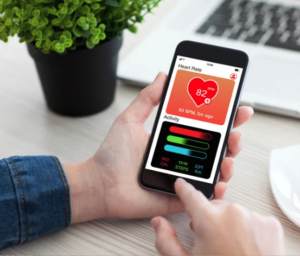
- Digital tools are enabling more personalized, data-driven wellness. Practitioners can now track behavior patterns such as sleep quality, stress levels, and daily habits, allowing them to adjust recommendations in real time. This creates more tailored, integrative care plans that reflect how individuals actually live, rather than relying on static or one-size-fits-all approaches.
- Teletherapy and virtual coaching are making holistic support more scalable. Professionals can work with clients across geographic boundaries, offer ongoing check-ins instead of one-time sessions, and build programs that combine multiple wellness modalities. This flexibility expands access while also improving continuity of care.
- The wellness industry has long emphasized prevention, and digital tools are reinforcing that model. With daily habit tracking, early signals of stress or imbalance can be identified before they escalate into burnout or more serious mental health concerns. This allows for earlier intervention and creates a structure for ongoing accountability and support.
- Hybrid care models are quickly becoming the standard. The most effective approaches combine virtual sessions such as therapy or coaching, digital tools for tracking and education, and optional in-person experiences like workshops or retreats. This blended model meets people where they are while still providing depth and connection making it not just a trend, but an expectation.
How the Wellness Industry Is Evolving
The global wellness industry is valued in the trillions and continues to grow, driven by rising demand for mental health support and more flexible care options. At the same time, expectations are shifting consumers want personalized, on-demand solutions that fit into daily life, and employers are investing more in mental
healthand wellness benefits to support their workforce. Technology is now central to how services are delivered, not an add-on, enabling more adaptive, data-informed experiences. As a result, the industry is moving away from static, one-size-fits-all programs toward more personalized wellness journeys built around individual needs and behaviors.
Career Opportunities in Digital and Integrative Mental Health
This shift is creating new roles that didn’t exist a decade ago. Examples include virtual health and wellness coaches, integrative mental health practitioners, telehealth program coordinators, digital wellness strategists, and corporate wellness consultants. These roles require a mix of skills, including a strong understanding of human behavior and lifestyle factors, comfort with digital tools and virtual communication, and the ability to guide clients toward sustainable, long-term habit change.
References
- Global Wellness Institute. “Global Wellness Economy Monitor.”
https://globalwellnessinstitute.org/industry-research/global-wellness-economy-monitor/ - McKinsey & Company. “Telehealth: A Quarter-Trillion-Dollar Post-COVID-19 Reality?”
https://www.mckinsey.com/industries/healthcare/our-insights/telehealth-a-quarter-trillion-dollar-post-covid-19-reality - World Health Organization. “Global Strategy on Digital Health 2020–2025.”https://www.who.int/publications/i/item/9789240020924
- National Institutes of Health. “Digital Health Interventions for the Management of Mental Health.”
https://pmc.ncbi.nlm.nih.gov/articles/PMC8030477/ - American Psychological Association. “Guidelines for the Practice of Telepsychology.”
https://www.apa.org/practice/guidelines/telepsychology - Centers for Disease Control and Prevention (CDC). “Telemedicine Use Among Adults: United States.”
https://www.cdc.gov/nchs/products/databriefs/db445.htm - Harvard Health Publishing. “Telehealth: The Advantages and Disadvantages.”
https://www.health.harvard.edu/staying-healthy/telehealth-the-advantages-and-disadvantages - National Center for Complementary and Integrative Health. “Complementary, Alternative, or Integrative Health.”
https://www.nccih.nih.gov/health/complementary-alternative-or-integrative-health-whats-in-a-name - Deloitte. “Global Health Care Outlook.”
https://www.deloitte.com/us/en/insights/industry/health-care/life-sciences-and-health-care-industry-outlooks/2026-global-health-care-outlook.html