About the Free Herbalism Project
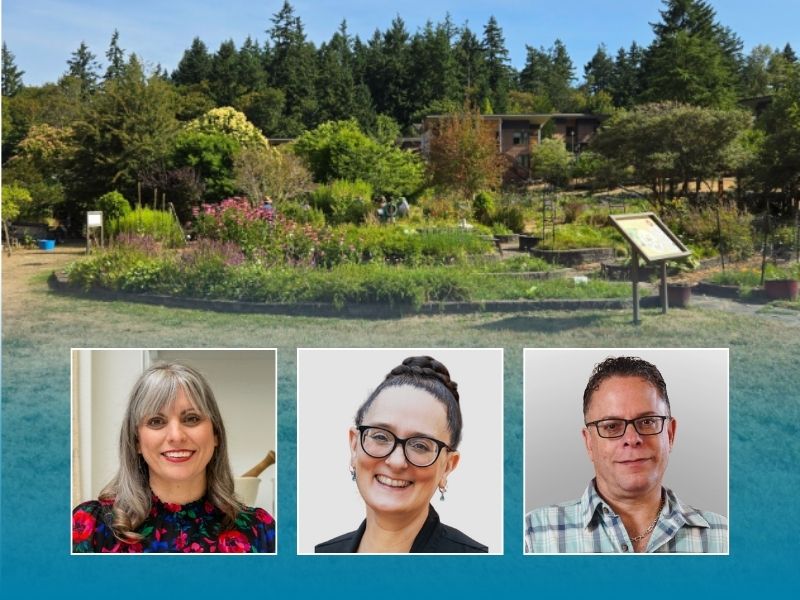
Mountain Rose Herbs’ Free Herbalism Project (FHP) is an initiative created in 2013 to make herbal education more accessible by offering free learning opportunities for the botanical community. It began as a series of educational events featuring visiting herbalists and has expanded to include bi-annual in-person gatherings, along with a growing digital resource library and educational hub designed to support connection, community engagement, and continued learning. ACHS Dean of Aromatherapy Amanda Lattin, MH, RA, Assistant Faculty in the Aromatherapy Department Dr. Erin Stewart, and David Tircuit, LAc, an acupuncturist and Chinese martial arts master, who partners in a Portland, Oregon, integrative clinic with Amanda Lattin, attended the Free Herbalism Project held at Bastyr University in August 2025. The event focused on themes of resiliency for mind, body, and spirit with interactive lectures and a garden herb walk in the stunning Bastyr teaching garden. Reflections from this event bring the warmth of summer and herbal supports for resiliency and inspiration for the new year.
Amanda Lattin’s Free Herbalism Project Reflections
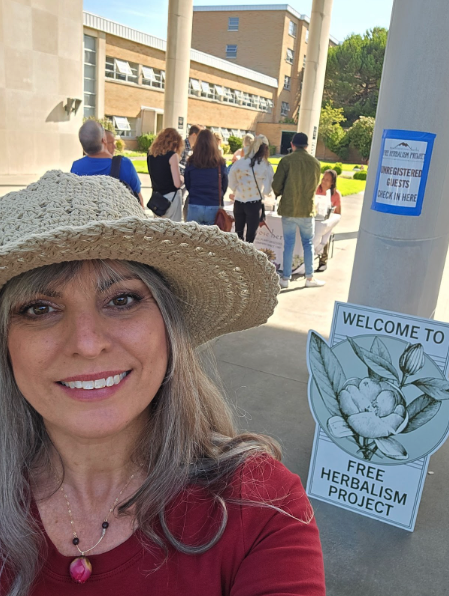
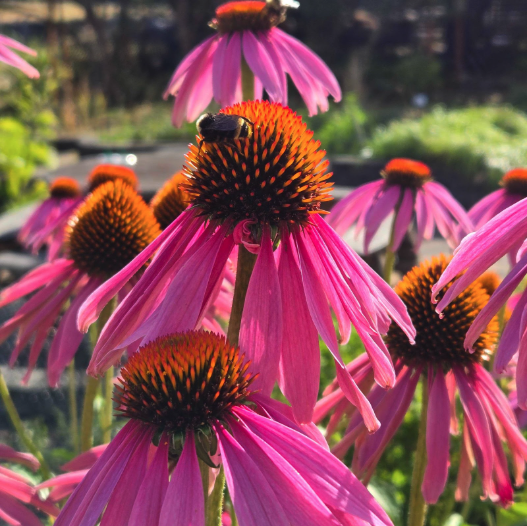
I had the pleasure of attending the 2025 Free Herbalism Project at Bastyr University. I was excited to see the Bastyr campus for the first time. Although I have had the opportunity to meet, collaborate, and work with many Bastyr graduates, I had never visited the campus in person. With a warm welcome from the Mountain Rose Herbs staff, we explored the Bastyr teaching garden in the early morning quiet. Bees were buzzing in the sunlight, visiting some of the largest and vibrantly colored echinacea blossoms I have ever seen. Since then, I have visualized these stunning echinacea plants each time I drink echinacea tea. It was a glorious beginning to the day.
I attended the morning lecture by Anjali Deva, an Ayurvedic practitioner and herbalist based in Southern California. Anjali opened her presentation by discussing the foundational principles of Ayurvedic medicine, including the five elements—ether (space), air, fire, water, and earth, the three doshas (pitta, vata, and kapha), and the importance of cultivating and protecting ojas. Ojas are formed from the refined essence of the seven bodily tissues and represent the strength, resilience, and radiant energy that sustain life and support the body, mind, and spirit. Anjali also shared the principles of Rasayana Rejuvenation, emphasizing the role of diet, lifestyle practices, and herbs in protecting ojas and, in turn, supporting strong immunity, a healthy stress response, and overall emotional and mental well-being. She shared some of her own journey with learning to support her ojas, and the healing journey she walked while studying ayurvedic medicine.
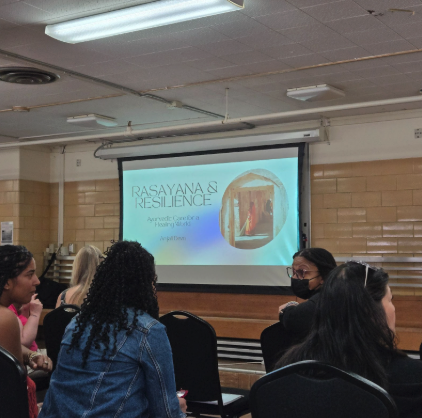
I attended the morning lecture by Anjali Deva, an Ayurvedic practitioner and herbalist based in Southern California. Anjali opened her presentation by discussing the foundational principles of Ayurvedic medicine, including the five elements—ether (space), air, fire, water, and earth, the three doshas (pitta, vata, and kapha), and the importance of cultivating and protecting ojas. Ojas are formed from the refined essence of the seven bodily tissues and represent the strength, resilience, and radiant energy that sustain life and support the body, mind, and spirit. Anjali also shared the principles of Rasayana Rejuvenation, emphasizing the role of diet, lifestyle practices, and herbs in protecting ojas and, in turn, supporting strong immunity, a healthy stress response, and overall emotional and mental well-being. She shared some of her own journey with learning to support her ojas, and the healing journey she walked while studying ayurvedic medicine.
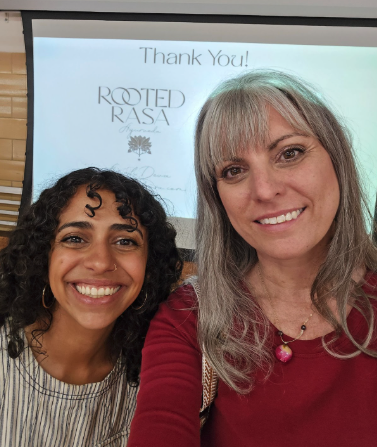
Anjali then shared some of her favorite herbs to support balanced doshas and protect ojas. We had the opportunity to smell and touch samples of adaptogenic herbs. Two of my favorites were tulsi and shatavari, which I have used many times to support myself and clients. Anjali’s presentation was delivered with an open heart and sincerity, drawing on her deep knowledge and experience with Ayurvedic practices and herbalism. It offered wonderful reminders to prioritize daily self-care and receive support from our plant allies.
About Amanda Lattin, BA, MAT, Dip. Aroma., MH, RA
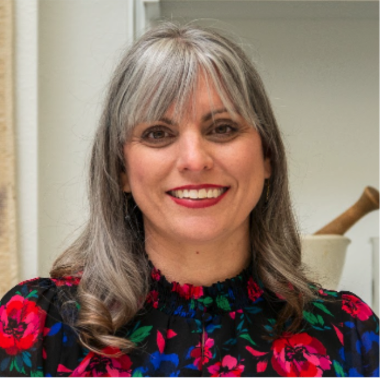 Amanda Lattin is the Dean of Aromatherapy at American College of Healthcare Sciences. She is an educator, researcher, and integrative health professional with a background in chemistry, phytochemistry, herbalism, and aromatherapy. She has taught chemistry, biochemistry, herbalism, and aromatherapy at multiple colleges and universities, including the National University of Natural Medicine. In 2007, she founded an herbal and aromatherapy consulting practice, providing client services, collaborating in clinical settings, and developing aromatherapy products. Amanda has authored academic articles, published professional case studies, and served as a peer reviewer for scientific journals. She has served on the Board of Directors of the Alliance of International Aromatherapists since 2021.
Erin Stewart’s Key Takeaways from the Free Herbalism Project
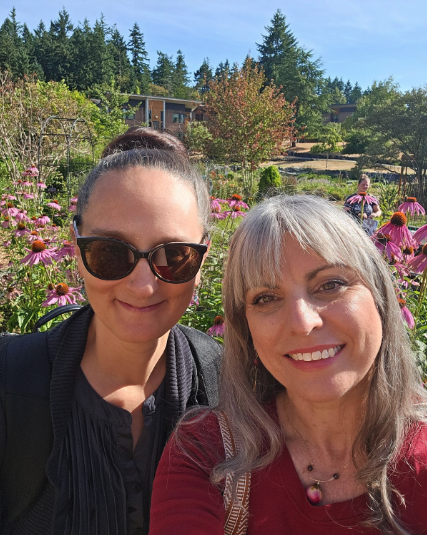
I recently had the opportunity to join an herb walk at Bastyr University in Kenmore, Washington, hosted by Mountain Rose Herbs. The University grounds are renowned for their lush forest, botanical gardens, and natural medicine education. Surrounded by towering evergreens, native plants, and carefully tended gardens, the walk was a chance to reconnect with the earth, deepen my knowledge of medicinal herbs, and experience first-hand the healing presence of nature.
During the walk, we stopped frequently to meet different plants and discuss their properties. Some highlights included:
- Stinging Nettle (Urtica dioica): Often dreaded for its sting, but revered as a mineral-rich tonic and nourishing herb for allergies, joint health, and overall vitality.
- Yarrow (Achillea millefolium): A delicate white-flowered plant traditionally used to stop bleeding, support fevers, and restore balance.
- Oregon Grape (Mahonia aquifolium): With its holly-like leaves and yellow roots, this plant is a powerful bitter that supports digestion and liver health.
- Red Clover (Trifolium pratense): Found in open fields, often used in herbalism for lymphatic support, women’s health, and as a nutritive tea.
- Plantain (Plantago major): A humble weed underfoot, but invaluable for wound healing, bug bites, and soothing inflammation.
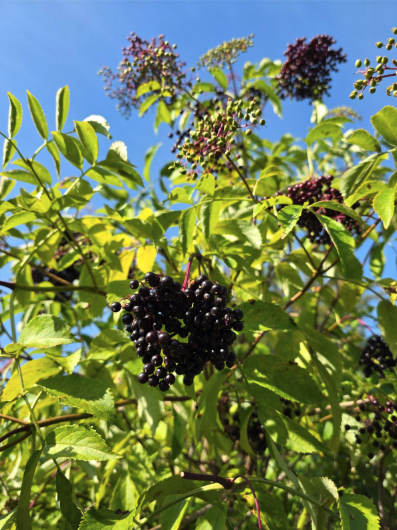
Each stop reminded me how medicine grows all around us, often hidden in plain sight.
What I loved most about this walk was how hands-on everything felt. It wasn’t just about hearing the Latin names or memorizing medicinal uses—we got to taste, smell, and even feel the plants in action. Chewing a marshmallow leaf and noticing that slimy texture, or the rush of cool mint hitting my head after tasting spearmint, made the plants come alive in a way no book ever could.
It also reminded me how much the seasons and the environment shape a plant’s medicine. Echinacea looks stunning in full flower right now, but the real healing lives in its roots, which only reach their full power after three years. The idea that plants carry their own rhythms and timing feels like a gentle reminder to be patient with the healing process, too.
And maybe the biggest takeaway? Plants meet us where we are. Some lift our spirits (like mimosa), some cool our overheated bodies (like spearmint), and others quietly soothe from the inside out (like marshmallow). Spending time with them, in the garden and in our daily lives, isn’t just about health—it’s about building a relationship.
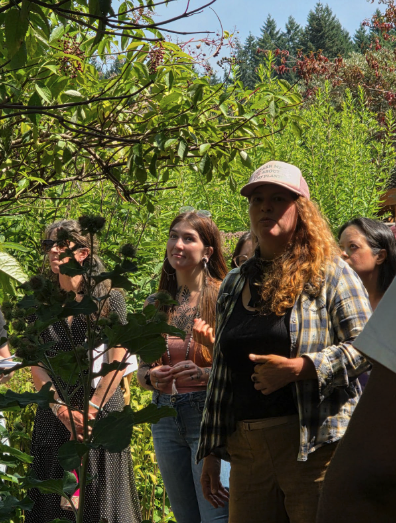
Walking through Bastyr’s gardens, I realized that herbal medicine is really about connection: to the plants, to the land, and to ourselves. Every plant has a personality and a story, and the more time we spend with them, the more they teach us.
If you ever get the chance, I can’t recommend an herb walk enough. Slow down, taste a leaf, and sit with a plant for a while. You might be surprised at what it has to say.
About Erin Stewart, DAOM, LAc. EAMP, LMT, CA
 Dr. Erin Stewart is Assistant Faculty in the Aromatherapy Department at ACHS. She is a licensed acupuncturist, massage therapist, and certified aromatherapist with over 20 years of experience in integrative healthcare. She began her aromatherapy training during massage therapy education and has since incorporated essential oils into acupuncture, herbal medicine, and bodywork to support pain management, stress relief, and overall wellness. Erin has owned and operated a successful private practice for more than two decades and has collaborated with medical doctors and physical therapists to bridge holistic and conventional care. She has also taught at Ashmead Massage School and Bastyr University, mentoring students through evidence-based, clinically grounded education.
David Tircuit Shares Highlights from the Free Herbalism Project
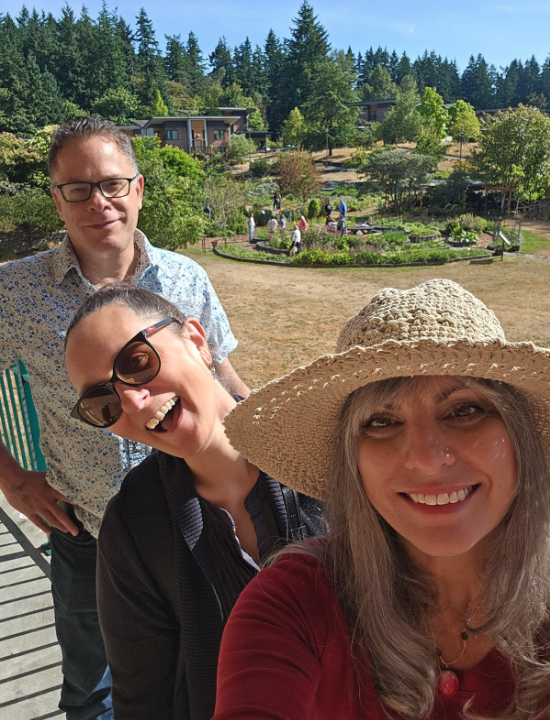
I had the opportunity to attend the Free Herbalism Project at Bastyr University. Among the classes offered, I found Suzanne Tabert’s Adrenal Fatigue to Adrenal Health class particularly intriguing. I was not disappointed as I found Tabert to be an excellent presenter with a wealth of knowledge and experience. Additionally, the subject matter seemed very relevant to the conditions facing many people in today’s high-pressure, high-stress society. Tabert grounded the subject matter in her own personal journey from complete adrenal collapse to her continued path toward adrenal health and life balance.
The class began with an introduction to the anatomy of the adrenal glands, and quickly moved to how stress and anxiety lead to adrenal fatigue. Precipitating factors included such things as work, relationships, finance, life changes, disturbing health diagnoses, and much more. After detailing the mechanics of the stress response system and how it leads to fight-or-flight, Tabert went on to discuss the nature of perceived threats versus actual ones and how both can set off this system. When this system is used too much, the stress response continues going or shuts down in exhaustion. The other organs take up the slack, leading to other health issues. Along with this description of adrenal fatigue, Tabert presented several case scenarios of adrenal fatigue leading to adrenal exhaustion. Additionally, she presented a list of vignettes as to how modern life pressures people, leading to such a collapse.

After this in-depth discussion of adrenal fatigue, Tabert went over things that can be done to prevent this. She included some simple, yet often overlooked things, such as resisting the need to overhelp others all the time, promoting adrenal health through good dietary choices, and the use of adaptogen herbs to soothe the system. Lastly, Tabert discussed the details of several herbs used to support adrenal health. Adrenal fatigue-related issues are a pattern I see frequently in our clinical practice. This class was an important refresher on the adaptogenic herbal supports available to incorporate into care plans for individuals who are establishing good adrenal health habits and helping their systems recover from overuse of the stress response.
About David Tircuit, LAc
 David Tircuit studied English Literature at the University of California at Berkeley (BA) and Traditional Chinese Medicine at Santa Barbara College of Oriental Medicine (MAcOM). He is a master of Traditional Chinese Martial Arts, including Northern Shaolin Kung Fu, Taiji Quan, and various styles of Qi Gong. He is a licensed acupuncturist, practicing in Portland, Oregon, for over 20 years, with thousands of hours of clinical experience.
Continue Your Herbal Journey with ACHS
If you’re interested in learning more about the Free Herbalism Project, visit the website or reach out to Dean Amanda Lattin.
Ready to begin or expand on your herbal education? Discover Integrative Health and Wellness programs at ACHS!
Looking for more guidance? Speak to one of our admissions advisors or request more information today!