Reviewed by Margaret LaPierre, Assistant Professor of Aromatherapy at ACHS
Carrier oils are a foundational element in natural skincare and aromatherapy. Whether you’re blending essential oils, creating DIY beauty products, or simply nourishing your skin, these plant-based oils offer both versatility and therapeutic benefits. Gentle, nutrient-rich, and adaptable, carrier oils help deliver moisture and active compounds directly to the skin.
What Are Carrier Oils?
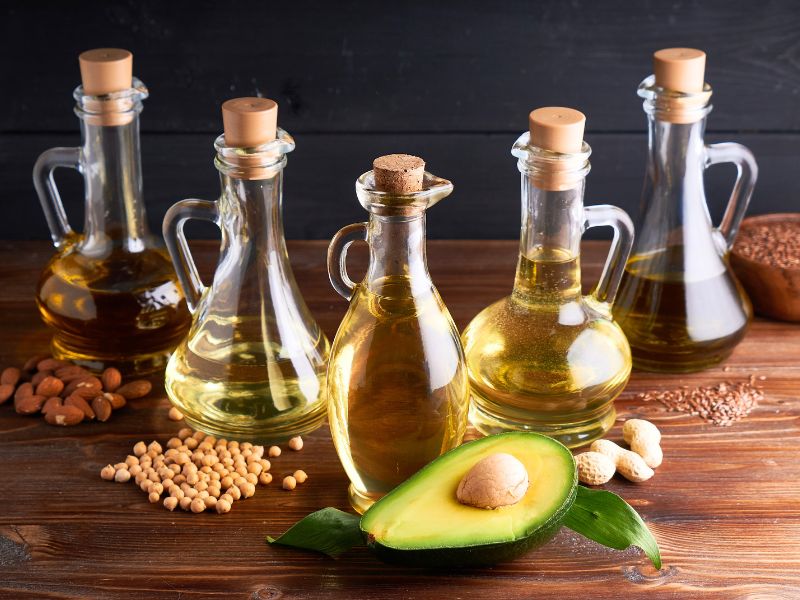
Carrier oils are derived from plants, seeds, kernels, nuts, and fruits. You may also hear them referred to as base oils, fixed oils, or vegetable oils. Unlike essential oils, carrier oils do not evaporate and can be used on their own or as a base to dilute essential oils for safe topical application.
Some carrier oils even serve a dual purpose, offering both functional and therapeutic benefits for the skin. Their primary role is to “carry” essential oils into the skin, improving absorption while reducing the risk of irritation. Because they don’t evaporate, carrier oils create a protective barrier that locks in moisture and enhances the effectiveness of essential oils.
Why Use Carrier Oils for Skin?
 Carrier oils have beneficial compounds that support skin health. Depending on the oil, they may:
- Moisturize and soften skin
- Help balance natural oil (sebum) production
- Support skin repair and regeneration
- Deliver vitamins and antioxidants
- Soothe irritation and inflammation
How to Choose the Right Carrier Oil
Selecting the right carrier oil depends on both quality and individual needs. Here are key factors to consider:
- Choose cold-pressed and organic oils for maximum therapeutic benefits
- Avoid additives or preservatives
- Check shelf life, as oils vary in stability
- Match the oil to your skin type (dry, oily, sensitive, etc.)
- Consider your application method (facial oil, massage, bath, hair treatment)
- Test for allergies or sensitivities before use
Always purchase from reputable vendors. The Apothecary Shoppe, the official retail store of ACHS, offers carefully selected and rigorously tested carrier oils, ensuring quality you can trust.
Popular Carrier Oils and Their Benefits (in alphabetical order)
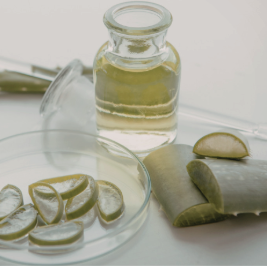 Aloe Vera Oil Aloe barbadensis
- Lightweight and fast-absorbing
- Not the same as aloe gel
- Ideal for soothing minor skin issues
- Shelf life: 8–10 months
First Aid Oil Recipe:
- 1 oz aloe vera oil Aloe barbadensis
- 6–12 drops lavender essential oil Lavandula angustifolia
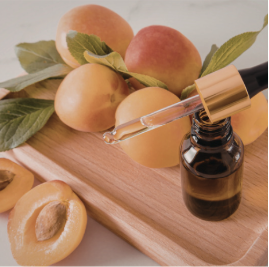 Apricot Oil Prunus armeniaca
- Lightweight alternative to sweet almond oil
- Moisturizing without leaving residue
- Rich in oleic and linoleic acids
- Ideal for sensitive or mature skin
- Shelf life: ~1 year
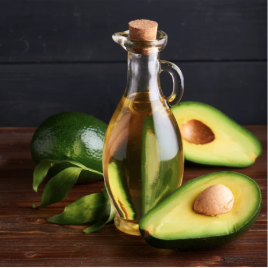 Avocado Oil Persea gratissima
- Thick, deeply penetrating, yet non-greasy
- Rich in nutrients, including Vitamin D
- Often used in therapeutic skincare
- Shelf life: ~1 year
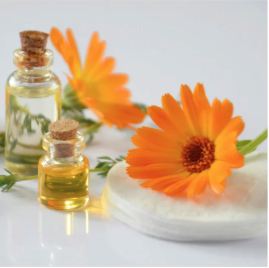 Calendula Oil Calendula officinalis
- Infused oil with calming, anti-inflammatory effects
- Supports sensitive or compromised skin
- Contains antioxidants and Vitamin C
- Shelf life: ~Infused oil – 2 years
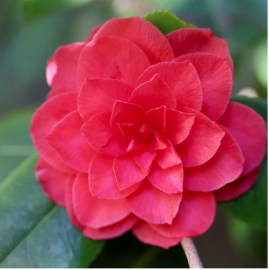 Camellia Oil Camellia japonica
- Light, fast-absorbing, non-comedogenic
- Leaves no greasy residue
- Rich in linoleic, linolenic, and oleic fatty acids
- Shelf life: ~2 years
Hydrating Facial Oil Recipe:
- 2 teaspoons camellia oil Camellia japonica
- 2 drops Roman chamomile essential oil Chamaemelum nobile
- 2 drops Neroli Citrus aurantium var. amara
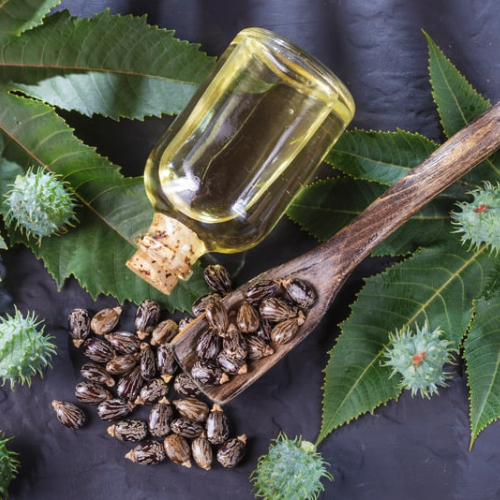 Castor Oil Ricinus communis
- Pale yellow color
- Feels tacky and slow to absorb
- Emollient, analgesic, and anti-inflammatory properties
- High in Ricinoleic acid
- Shelf life: ~ 1-2 years
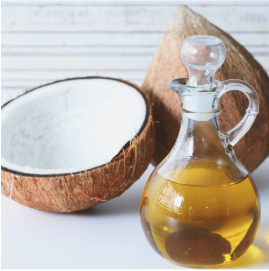 Coconut Oil Cocos nucifera
- Nourishing with a mild coconut scent
- Best for dry or sensitive skin, mild infections, and wound care
- The fractionated version is ideal for facial use
- Highly stable and resistant to rancidity, unless exposed to air
- Shelf life: ~2 years
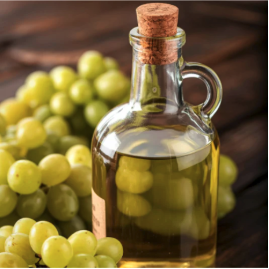 Grapeseed Oil Vitis vinifera
- One of the lightest carrier oils
- Absorbs quickly with no residue
- Excellent for acne-prone skin
- Contains more than 50% of linoleic acid
- Can be used as a natural makeup remover
- Shelf life: ~1 year
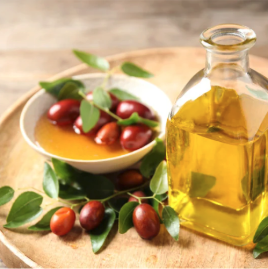 Jojoba Oil Simmondsia chinensis
- Technically, a wax, not an oil
- Mimics natural sebum for balanced skin
- Suitable for all skin types
- Absorbs readily into the skin, leaves no residue
- Highly stable and does not go rancid
- Shelf life: ~ 4-5 years
Hot Oil Hair Treatment Recipe:
- 1 tablespoon jojoba oil Simmondsia chinensis
- Wrap hair with a towel soaked in hot water
- Optional: 1 drop lavender Lavandula angustifolia or Rosemary Rosmarinus officinalis ct. 1,8-cineole essential oil
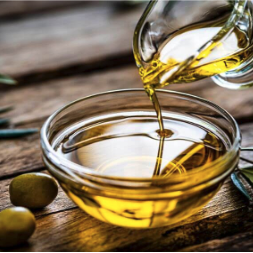 Olive Oil Olea europaea
- Reminiscent of olives, fragrance can dominate
- Feels heavy and absorbs slowly
- Leaves a greasy residue
- High in oleic acid
- Good for soothing minor skin issues
- Shelf life: ~ 1-2 years
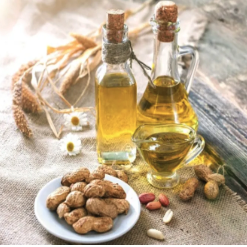 Peanut Oil Arachis hypogaea
- Faint nutty aroma, pale yellow in color
- Thin, oily, and leaves a greasy residue
- Great for dry skin
- Contains oleic and linoleic acid
- Can become cloudy if kept at cool temperatures
- Avoid with nut allergies
- Shelf life: ~ 1-2 years unopened; 6-12 months opened
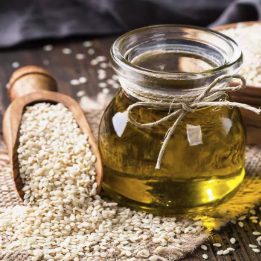 Sesame Oil Sesamum indicum
- Light nutty aroma
- Light to medium-dark yellow in color
- Similar to sweet almond oil, leaves a greasy residue
- Rich in oleic and linoleic acid
- Good for minor abrasions, eczema, and dry scalp
- Shelf life: ~ 2 years
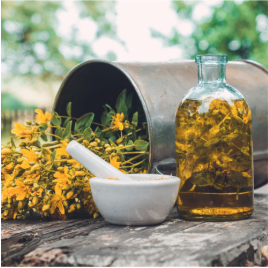 St. John’s Wort Oil (Hypericum perforatum)
- Anti-inflammatory, astringent, and antiseptic
- Known for supporting rapid skin healing
- Perform a patch test before use
- Avoid during pregnancy
- Shelf life: ~2 years
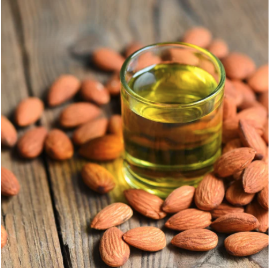 Sweet Almond Oil Prunus amygdalis var. dulcis
- Closely resembles the skin’s natural sebum
- Protects and nourishes the skin
- Rich in oleic acid
- Rich and slightly oily, may leave a residue
- Suitable for most skin types (avoid with nut allergies)
- Shelf life: ~2 years
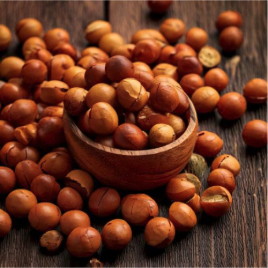 Tamanu Oil Calophyllum inophyllum
- Deeply restorative with a nutty aroma
- Supports wound healing and skin regeneration
- Anti-inflammatory, antifungal, and naturally antimicrobial
- Shelf life: up to 4 years
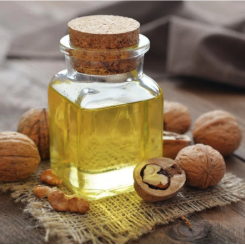 Walnut Oil Juglans nigra
- Clear color, light viscosity
- Similar to sweet almond oil, leave a greasy residue
- High in linoleic acid
- A good facial oil due to its antioxidant properties
- Keep in cool temperatures away from light
- Avoid with nut allergies
- Shelf life: ~ 1 year
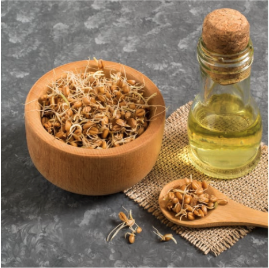 Wheat Germ Oil Triticum aestivum
- Feels thick and heavy
- Rich in Vitamins A & E
- Strong antioxidant properties
- Useful in first aid applications
- Shelf life: ~ 6 months
Burn Ointment Recipe:
- Equal parts wheat germ oil Triticum aestivum, powdered comfrey root Symphytum officinale, and honey
Why Carrier Oils Matter
Carrier oils do much more than dilute essential oils—they actively nourish and support your skin. Whether you need a lightweight oil for acne-prone skin or a richer option for deep hydration, there’s a carrier oil to match your needs. Choosing high-quality oils and aligning them with your skin type can naturally elevate your skincare routine.
Take the Next Step in Essential Oil Education
If you’re ready to go deeper, learning how to work with carrier oils, essential oils, and botanicals can open up even more possibilities. Programs in Aromatherapy and Herbal Medicine at ACHS offer expert-led training to help you build both practical skills and a strong foundation in natural wellness.
Explore Herbal Medicine Programs
This content is for educational purposes only and is not intended to be medical advice. Always use herbs and essential oils with caution and keep out of reach of children. Use particular caution when pregnant or nursing. Always check contraindications and think safety first! The statements herein have not been evaluated by the FDA. Products are not intended to diagnose, treat, cure, or prevent disease.