Written by Dorene Petersen, ACHS Founding President. Information first published in the International Herb Association “Turmeric: Herb Of The Year™ 2026” book. Reprinted with permission.
A Brief History of Turmeric
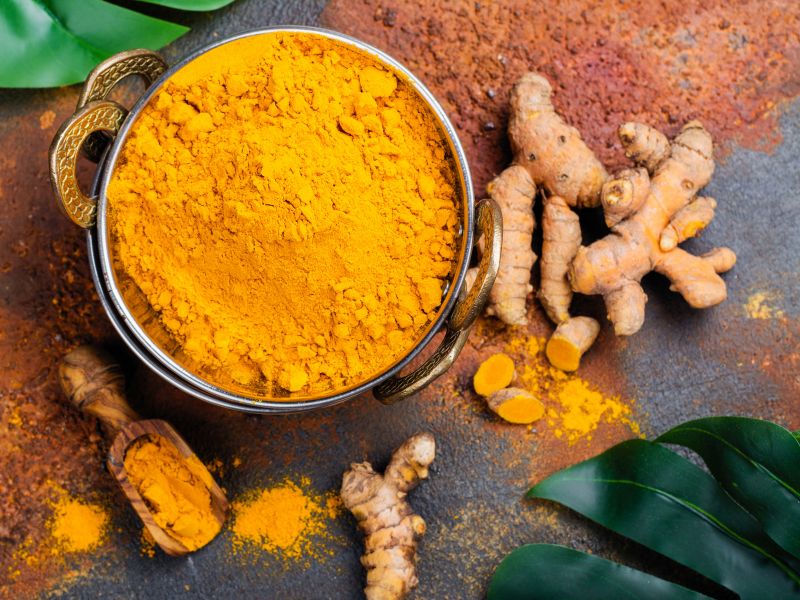
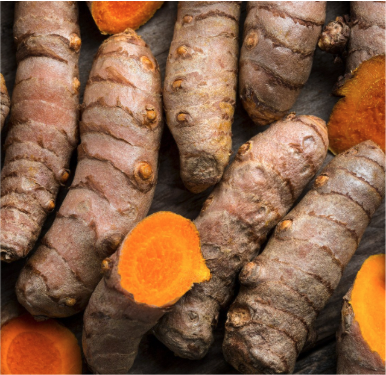 Turmeric (Curcuma longa L.) has colored human culture, literally and figuratively, for more than 4,000 years. Revered in Sanskrit as Haridra, this vibrant rhizome has long been woven into culinary traditions, sacred rituals, and healing systems across Asia, Africa, and beyond.
In regions such as Bali and Kerala, turmeric has traditionally been used to bless marriages and purify spaces. Ancient Ayurvedic texts, including the Sushruta Samhita (circa 250 BCE), documented its use for wound cleansing (Vrana-shodhana) and tissue healing (Vrana-ropana). As trade along the Silk Road expanded, turmeric traveled with it, reaching China by 700 AD, East Africa by 800 AD, and West Africa by 1200 AD. Even Marco Polo noted its similarity to saffron, signaling its early global appeal.
Today, this ancient botanical stands firmly in the scientific spotlight, and the International Herb Association has named turmeric the 2026 Herb of the Year. Read on to learn what makes this herb so unique and powerful.
Turmeric Benefits Backed by Science
What makes turmeric so enduring is the remarkable alignment between traditional use and modern evidence.
Contemporary research highlights curcumin, the primary curcuminoid in turmeric powder, as an excellent modulator of inflammation and oxidative stress. Studies show it influences key cellular pathways such as:
- NF-κB, the body’s master inflammation switch
- STAT3, involved in cell growth and immune signaling
- MAPK, which coordinates cellular stress responses
By helping regulate these pathways, turmeric doesn’t simply mask symptoms; it supports the body’s return to balance.
Clinical Evidence Across Body Systems
Skin Health
Modern laboratory research confirms turmeric’s traditional reputation for soothing irritated skin. Curcumin has been shown to reduce inflammatory markers in human skin cells, supporting conditions such as dermatitis and eczema when used orally or topically.
Joint Comfort
In a randomized clinical trial involving knee osteoarthritis, turmeric extract performed comparably to ibuprofen for reducing pain and improving mobility, while producing fewer gastrointestinal side effects. This reinforces turmeric’s role as a gentler, plant-based option for long-term joint support.
Bone Health
Emerging research suggests curcumin may enhance bone density when used alongside standard osteoporosis therapy. In one clinical study of postmenopausal women, those taking curcumin with alendronate showed greater improvements in bone strength than those taking alendronate alone.
Brain and Mood Support
A 2025 meta-analysis of randomized controlled trials found modest but meaningful improvements in working memory and processing speed with bioavailable curcumin formulations, along with some mood benefits.
Turmeric Powder vs. Essential Oil
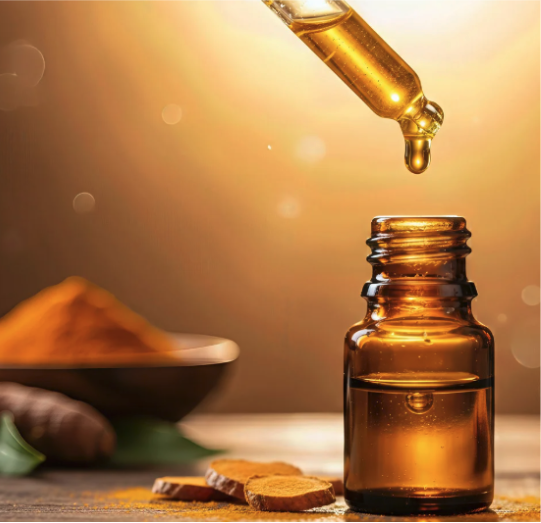 There is an important distinction between turmeric powder and turmeric essential oil. It’s crucial to understand that they are not interchangeable.
- Turmeric powder is rich in curcuminoids (especially curcumin) and supports systemic inflammation, gut health, joints, and metabolism.
- Turmeric essential oil contains volatile sesquiterpenes such as ar-turmerone, which show antimicrobial and neuroregenerative activity and are often used topically or aromatically.
Used thoughtfully, these forms can work synergistically.
Boosting Curcumin Absorption
While the curcumin in turmeric powder is a powerful modulator of inflammation and oxidative stress, one of its biggest limitations is poor natural absorption. Fortunately, modern delivery strategies dramatically improve its effectiveness. Research shows absorption increases when curcumin is:
- Paired with piperine (black pepper)
- Taken with healthy fats
- Delivered in liposomal, phytosome, or nanoparticle forms
These innovations help translate turmeric’s traditional promise into measurable clinical outcomes.
A Sustainable Future for a Golden Crop
India currently produces more than 70% of the world’s turmeric, and global demand is projected to reach $1 billion by 2030. For many smallholder farmers, turmeric is more than a spice; it is economic resilience and cultural heritage.
However, rising demand also poses challenges, including climate variability, price fluctuations, and the need for organic and fair-trade practices. Conscious sourcing is essential to ensure this golden root continues to support both planetary and human health.
It’s important to source turmeric by choosing organic, pesticide-free rhizomes grown with traditional, low-impact methods that protect soil and biodiversity. Additionally, prioritizing regionally and ethically produced turmeric helps maintain potency while supporting environmental and cultural sustainability.
Watch the video below to explore an Indian turmeric field with this virtual field trip from ACHS’s Indian study abroad tour and learn more about ACHS’s commitment to sustainability and community involvement here.

The Golden Takeaway of Turmeric
Turmeric’s selection as the 2026 Herb of the Year is more than symbolic. It showcases a rare botanical that bridges ancient wisdom and modern science. From Ayurvedic wound care to cutting-edge research on inflammation, cognition, and joint health, turmeric continues to prove its relevance.
Whether incorporated into food, standardized supplements, topical preparations, or essential oil blends, turmeric remains a versatile ally for holistic wellness. And as research evolves and sourcing becomes more sustainable, this sacred spice is poised to shine even brighter in integrative health practice.
Interested in learning more about evidence-based herbal medicine? Explore herbal medicine programs at ACHS, or request more information today!
References
Abdel-Azim, N. S., Shabana, M. M., Ali, A. A., El Sayed, A. M., & Sleem, A. A. (2020). Curcuma longa L. rhizome essential oil: A review of extraction, chemical composition, and biological effects. Plants, 10(1), 44. Retrieved May 16, 2025, https://www.mdpi.com/2223-7747/10/1/44.
Alam, M. S., Anwar, M. J., Maity, M. K., Azam, F., Jaremko, M., & Emwas, A.-H. (2024). The Dynamic Role of Curcumin in Mitigating Human Illnesses: Recent Advances in Therapeutic Applications. Pharmaceuticals, 17(12), 1674. Retrieved May 16, 2025, https://doi.org/10.3390/ph17121674
Apisariyakul, A., Vanittanakom, N., & Buddhasukh, D. (1995). Antifungal activity of turmeric oil extracted from Curcuma longa (Zingiberaceae). Journal of Ethnopharmacology, 49(3), 163–169. Retrieved May 26, 2025, https://www.sciencedirect.com/science/article/abs/pii/0378874195013202?via%3Dihub
Beevers, C. S., Huang, S., & Lee, S. H. (2006). Curcumin inhibits the mammalian target of rapamycin-mediated signaling pathways in rhabdomyosarcoma cells. Cancer Research, 66(3), 1615–1621. Retrieved June 5, 2025, https://pubmed.ncbi.nlm.nih.gov/16550606/.
Bertoncini‑Silva, C., Vlad, A., Ricciarelli, R., et al. (2024). Enhancing the bioavailability and bioactivity of curcumin for disease prevention and treatment. Antioxidants, 13(3), 331. https://doi.org/10.3390/antiox13030331 Retrieved July 24, 2025, PubMed: https://pubmed.ncbi.nlm.nih.gov/38539864
Bhishagratna, K. L. (1907). An English translation of the Sushruta Samhita based on the original Sanskrit text (Vol. I). Calcutta: [Publisher not clearly stated, historical edition]. Retrieved July 24, 2025, https://rarebooksocietyofindia.org/book_archive/Sushruta%20Samhita%201.pdf
Chainani-Wu, N. (2003). Safety and anti-inflammatory activity of curcumin: A component of turmeric (Curcuma longa). The Journal of Alternative and Complementary Medicine, 9(1), 161–168. https://doi.org/10.1089/107555303321223035. Retrieved July 29, 2025, https://www.liebertpub.com/doi/10.1089/107555303321223035
Corrêa, J. G. de S., Bianchin, M., Lopes, A. P., Silva, E., Ames, F. Q., Pomini, A. M., Carpes, S. T., Rinaldi, J. de C., Melo, R. C., Kioshima, E. S., Bersani-Amado, C. A., Pilau, E. J., de Carvalho, J. E., Ruiz, A. L. T. G., & Santin, S. M. de O. (2021). Chemical profile, antioxidant and anti-inflammatory properties of Miconia albicans (Sw.) Triana (Melastomataceae) fruits extract. Journal of Ethnopharmacology, 273, 113979. https://doi.org/10.1016/j.jep.2021.113979 Retrieved July 21, 2025 https://www.sciencedirect.com/science/article/pii/S0378874121002063
Curran, M. P., Sharma, S., Patel, G., et al. (2024). Curcumin in cancer and inflammation: molecular mechanisms and clinical insights. International Journal of Molecular Sciences, 25(9), 5001. https://doi.org/10.3390/ijms25095001 Retrieved July 08 2025, https://www.mdpi.com/1422-0067/25/9/5001
Den Hartogh, D. J., Gabriel, A., & Tsiani, E. (2020). Antidiabetic Properties of Curcumin I: Evidence from In Vitro Studies. Nutrients, 12(1), 118. https://doi.org/10.3390/nu12010118 Retrieved July 24, 2025, PubMed: https://pubmed.ncbi.nlm.nih.gov/31906278
Ding, D., Liu, G., Yan, J., Zhang, Q., Meng, F., & Wang, L. (2024). Curcumin alleviates osteoarthritis in mice by suppressing osteoclastogenesis in subchondral bone via inhibiting NFκB/JNK signaling pathway. PLOS ONE, 19(9), e0309807. https://doi.org/10.1371/journal.pone.0309807 Retrieved May 15, 2025, https://journals.plos.org/plosone/article?id=10.1371/journal.pone.0309807
Dugoua, J. J., Seely, D., Perri, D., Cooley, K., Forelli, T., Mills, E., & Koren, G. (2008). Safety and efficacy of turmeric (Curcuma longa) during pregnancy and lactation. Canadian Journal of Clinical Pharmacology, 15(1), e66–e73. Retrieved July 27, 2025, https://www.researchgate.net/publication/23700343
European Medicines Agency. (2018). Assessment report on Curcuma longa L., rhizoma. EMA/HMPC/150777/2015. Retrieved May 08, 2025,
https://www.ema.europa.eu/en/documents/herbal-report/draft-assessment-report-curcuma-longa-l-c-domestica-valeton-rhizome-revision-1_en.pdf
Ferreira, F. D., Kemmelmeier, C., Arrotéia, C. C., da Costa, C. L., Mallmann, C. A., & Machinski Jr., M. (2013). Inhibitory effect of the essential oil of Curcuma longa L. and curcumin on aflatoxin production by Aspergillus flavus Link. Food Chemistry, 136(2), 789–793. https://doi.org/10.1016/j.foodchem.2012.08.003. Retrieved July 13, 2025, https://www.sciencedirect.com/science/article/abs/pii/S0308814612012465
Food and Drug Administration (FDA). (2023). Dietary supplement labeling guide. Retrieved May 02, 2025, https://www.fda.gov/food/dietary-supplements
Gilad, O., Rosner, G., Ivancovsky-Wajcman, D., Zur, R., Rosin-Arbesfeld, R., Gluck, N., Strul, H., Lehavi, D., Rolfe, V., & Kariv, R. (2022). Efficacy of Wholistic Turmeric Supplement on Adenomatous Polyps in Patients with Familial Adenomatous Polyposis: A randomized, double-blinded, placebo-controlled study. Genes, 13(12), 2182.. Retrieved June 04, 2025, https://www.mdpi.com/2073-4425/13/12/2182
Goel, A., Kunnumakkara, A. B., & Aggarwal, B. B. (2008). Curcumin as “Curecumin”: From kitchen to clinic. Biochemical Pharmacology, 75(4), 787–809. https://doi.org/10.1016/j.bcp.2007.08.016. Retrieved June 04, 2025, https://www.sciencedirect.com/science/article/abs/pii/S0006295207005758?via%3Dihub
Gomes, T. P. O., Souza, J. I. N., Somerlate, L. C., Mendonça, V. A., Lima, N. M., Carli, G. P., Castro, S. B. R., Andrade, T. J. A. S., Dias, J. V. L., Oliveira, M. A. L., Alves, C. C. S., & Carli, A. P. (2021). Miconia albicans and Curcuma longa herbal medicines positively modulate joint pain, function, and inflammation in patients with osteoarthritis: A clinical study. Inflammopharmacology, 29, 617–626.Retrieved June 04, 2025, https://pubmed.ncbi.nlm.nih.gov/33452967/
Government of India. (2021). Ayurvedic Pharmacopoeia of India. Retrieved July 25, 2025, https://www.ayush.gov.in
Health Canada. (2022). Natural health products: Ingredient database. Retrieved May 03, 2025, https://www.canada.ca
Hewlings, S. J., & Kalman, D. S. (2017). Curcumin: A review of its effects on human health. Foods, 6(10), 92. Retrieved June 04, 2025, https://pmc.ncbi.nlm.nih.gov/articles/PMC5664031/
Joshi, J., Ghaisas, S., Vaidya, A., Vaidya, R., Kamat, D. V., Bhagwat, A. N., & Bhide, S. (2003). Early human safety study of turmeric oil (Curcuma longa oil) administered orally in healthy volunteers. Journal of the Association of Physicians of India, 51, 1055–1060. Retrieved May 01, 2025, https://pubmed.ncbi.nlm.nih.gov/15260388
Khanizadeh, F., Rahmani, A., Asadollahi, K., & Ahmadi, M. R. H. (2018). Combination therapy of curcumin and alendronate modulates bone turnover markers and enhances bone mineral density in postmenopausal women with osteoporosis. Archives of endocrinology and metabolism, 62(4), 438–445. Retrieved July 24, 2025 https://doi.org/10.20945/2359-3997000000060
Kunnumakkara, A. B., Bordoloi, D., Padmavathi, G., Monisha, J., Roy, N. K., Prasad, S., & Aggarwal, B. B. (2017). Curcumin, the golden nutraceutical: Multitargeting for multiple chronic diseases. British Journal of Pharmacology, 174(11), 1325–1348. Retrieved July 24, 2025 https://doi.org/10.1111/bph.13621
Kuptniratsaikul, V., Thanakhumtorn, S., Chinswangwatanakul, P., Wattanamongkonsil, L., & Thamlikitkul, V. (2014). Efficacy and safety of Curcuma domestica extracts compared with ibuprofen in patients with knee osteoarthritis. Clinical Interventions in Aging, 9, 451–458. https://doi.org/10.2147/CIA.S58535 Retrieved July 24, 2025, PubMed: https://pubmed.ncbi.nlm.nih.gov/24672232
Lawrence, B. M. (2008). Variations in turmeric oil composition from different growing regions. Perfumer & Flavorist, 33, 32–39. Retrieved July 19, 2025, https://www.perfumerflavorist.com/flavor/ingredients/article/21860830/progress-in-essential-oils-turmeric-oil-part-1
Matsuda, S., & Chang, C. (2021). Curcuminoid content of turmeric cultivars in Hawaii. Journal of Medicinal Plants Research, 15(3), 45–52. Retrieved June 20, 2025, https://gms.ctahr.hawaii.edu/gs/handler/getmedia.ashx?moid=29948&dt=3&g=12
MDPI Review Team. (2023). Curcumin enhances the efficacy of doxorubicin, paclitaxel, 5fluorouracil, and cisplatin in preclinical breast cancer models: mechanisms and potential for combinational therapy. International Journal of Molecular Sciences, 23(4), 2144. https://doi.org/10.3390/ijms23042144 Retrieved July 09, 2025, https://www.mdpi.com/1422-0067/23/4/2144
Murugesan, S., Rajkumar, V., Annapoorani, C. A., & Gunasekaran, C. (2023). Functionalized nanoencapsulated Curcuma longa essential oil in chitosan nanopolymer and their application for antioxidant and antimicrobial efficacy. International Journal of Biological Macromolecules, 251, 126387. Retrieved May 12, 2025, https://doi.org/10.1016/j.ijbiomac.2023.126387
Peng, H., Tan, J., & Li, X. (2025). Loading curcumin on TiO₂ nanotubes to improve surface biological activity. Biomedical Materials, 20(4). Retrieved June 15th, 2025, https://doi.org/10.1088/1748-605X/ade488
Polo, M. (1903). The book of Ser Marco Polo, the Venetian: Concerning the kingdoms and marvels of the East (H. Yule & H. Cordier, Eds., Vol. 2). London: John Murray. Retrieved June 15th, 2025, https://www.gutenberg.org/files/12410/12410-h/12410-h.htm
Rafatullah, S., Tariq, M., Al-Yahya, M. A., Mossa, J. S., & Ageel, A. M. (1990). Evaluation of turmeric (Curcuma longa) for gastric and duodenal antiulcer activity in rats. Journal of Ethnopharmacology, 29(1), 25–34. https://doi.org/10.1016/0378-8741(90)90018-B. Retrieved July 01, 2025, https://www.sciencedirect.com/science/article/abs/pii/037887419090094A
Shoba, G., Joy, D., Joseph, T., Majeed, M., Rajendran, R., & Srinivas, P. S. (1998). Influence of piperine on the pharmacokinetics of curcumin in animals and human volunteers. Planta medica, 64(4), 353–356. Retrieved July 20th, 2025 https://doi.org/10.1055/s-2006-957450
Sidhu, S., Chempakam, B., Leela, N. K., & Bhai, R. S. (2011). Chemoprevention by essential oil of turmeric leaves (Curcuma longa L.) on the growth of Aspergillus flavus and aflatoxin production. Food and Chemical Toxicology, 49(5), 1188–1192. https://doi.org/10.1016/j.fct.2011.02.014. Retrieved May 04, 2025, https://pubmed.ncbi.nlm.nih.gov/21354246/.
Sureshbabu, S., Malarvizhi, G. L., Sivakumar, K., & Saravanan, M. (2025). Unraveling the molecular mechanism of curcumin against atopic dermatitis: An integration of network pharmacology, molecular docking, and in vitro validation. Drug Development Research. Advance online publication. https://doi.org/10.1002/ddr.70058 Retrieved June 15th, 2025 https://analyticalsciencejournals.onlinelibrary.wiley.com/doi/10.1002/ddr.70058
Therapeutic Goods Administration (TGA). (2023). Permissible indications for listed medicines. Retrieved June 06, 2025, https://www.tga.gov.au
The Bright Side of Curcumin: A Narrative Review of Its Therapeutic Potential in Cancer. (2024). Cancers, 16(14), 2580. Retrieved July 29, 2025, https://www.mdpi.com/2072-6694/16/14/2580
Tripathi, R., & Misra, R. (1974). Effect of turmeric and its curcuminoids on iron absorption in rats. Indian Journal of Medical Research, 62(3), 436–441. Retrieved June 27, 2025, https://pubmed.ncbi.nlm.nih.gov/4415866
Wang, W., Zhao, R., Liu, B., & Li, K. (2025). The effect of curcumin supplementation on cognitive function: An updated systematic review and meta-analysis. Frontiers in Nutrition, eCollection 2025. Retrieved July 24, 2025, https://doi.org/10.3389/fnut.2025.1549509
World Health Organization (WHO). (2019). WHO monographs on selected medicinal plants – Curcuma longa. Retrieved June 16, 2025, https://iris.who.int/bitstream/handle/10665/42052/9241545178.pdf
Yu, L., Li, N., Li, B., Ye, K. X., Guo, J., Shan, J., Cao, L., Song, M., Wang, Y., Lee, T. S., Maier, A. B., & Feng, L. (2025). Targeting cognitive aging with curcumin supplementation: A systematic review and meta-analysis. The Journal of Prevention of Alzheimer’s Disease, 100248. Advance online publication. Retrieved June 21, 2025, https://pubmed.ncbi.nlm.nih.gov/40579315/.
Zhou J, Wang L, Peng C and Peng F (2022) Co-Targeting Tumor Angiogenesis and Immunosuppressive Tumor Microenvironment: A Perspective in Ethnopharmacology. Front. Pharmacol. 13:886198. doi: 10.3389/fphar.. 2022.886198. Retrieved June 21, 2025, https://www.frontiersin.org/articles/10.3389/fphar.2022.886198/full.
This content is for educational purposes only and is not intended to be medical advice. Always use herbs and essential oils with caution and keep out of reach of children. Use particular caution when pregnant or nursing. Always check contraindications and think safety first! The statements herein have not been evaluated by the FDA. Products are not intended to diagnose, treat, cure, or prevent disease.