The aromatherapy industry continues to evolve alongside growing consumer interest in holistic wellness, evidence-based integrative health practices, and sustainable product education. At ACHS, students studying aromatherapy gain both foundational scientific knowledge and practical wellness insights designed to support modern career pathways in health, wellness, and product-based industries.
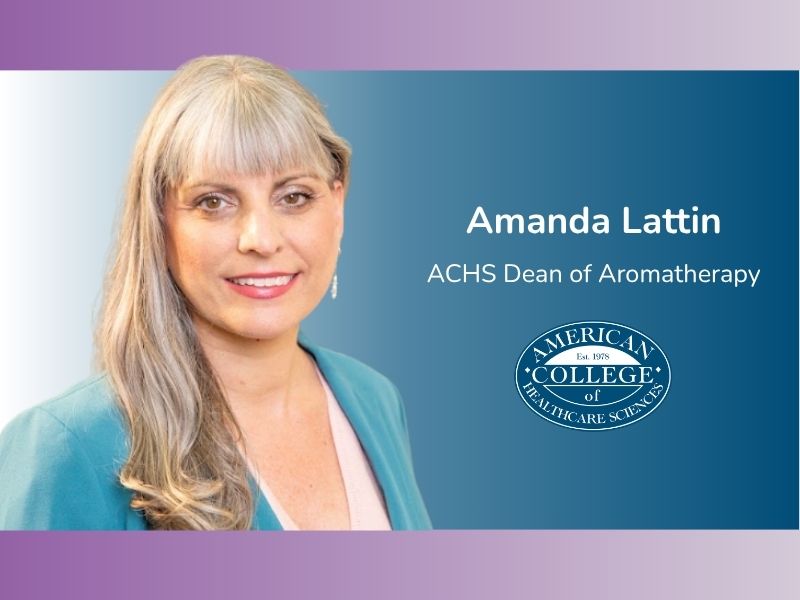
In this conversation, ACHS Dean of Aromatherapy, Amanda Lattin, BA, MAT, Dip. Aroma., MH, RA, shares her perspective on the future of aromatherapy education, emerging career opportunities, sustainability in the wellness industry, and what students should know before entering the field.
This interview explores aromatherapy education, wellness career pathways, sustainability, evidence-based integrative health practices, and the future of careers in the wellness industry.

Dean Lattin’s Background & Path to ACHS
Can you share a little about your background and your role at ACHS?
I’m the Dean of Aromatherapy at ACHS, which means I oversee all of our aromatherapy programs, from our introductory micro-credential through the Master of Science in Aromatherapy and the aromatherapy specialization in our Doctor of Science in Integrative Health. My first training was in chemistry. I earned a BA in Chemistry from Huntingdon College and a Master of Arts in Teaching with a chemistry concentration from Lewis & Clark College, and I taught high school chemistry before returning to medicine-making. I studied essential oils with Dr. Kurt Schnaubelt and then completed my Diplomas in Aromatherapy and Herbal Studies right here at ACHS. I’m a Registered Aromatherapist, I’ve run an aromatherapy and herbal consulting practice in Portland since 2007/2008, and I serve as Vice President of the Alliance of International Aromatherapists.
What first inspired your interest in integrative health and wellness?
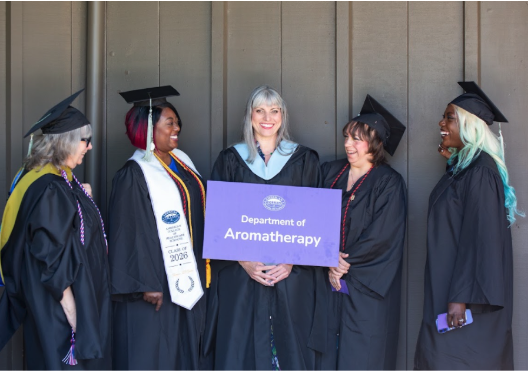 I planted my first garden when I was six, and I’ve been fascinated by what plants can do ever since. I also grew up in a family that made holistic, natural choices part of everyday life, so it never felt unusual to me. The real turning point came during a college internship in a chiropractor’s office. Seeing practitioners treat the whole person, not just a symptom, showed me this could be a profession and not only a personal interest.
What originally drew you to ACHS?
ACHS brings together everything I care about: botanicals, chemistry, education, and helping people take charge of their own health. I came to ACHS first as a student, and I was struck by how seriously the college took the science behind holistic practice. When I had the chance to teach here, it felt like coming home to a place where my chemistry classroom and my apothecary could finally share the same space.
What continues to keep you passionate about this work today?
There is always something new to learn. Every essential oil is a complex mixture of compounds, and research into how those compounds work continues to grow. I also love watching students make the leap from “I enjoy using essential oils” to “I can explain why this blend is safe and effective for this person.” That moment of confidence never gets old.
The ACHS Student Experience
What makes the ACHS learning experience unique for aromatherapy students?
Our students learn aromatherapy the way a professional practices it: chemistry first, then safety, then application. They study essential oil constituents, extraction and quality assessment, and methods of administration, and they build real wellness plans and evidence-based case studies. Hands-on work is built in, with students blending and preparing formulas at home. ACHS has also been teaching aromatherapy since 1978; our programs meet the curriculum standards of the Alliance of International Aromatherapists (AIA) and the National Association for Holistic Aromatherapy (NAHA), and qualifying graduates are eligible to sit for the Aromatherapy Registration Council exam. Students know their education is recognized by the profession they’re entering.
What types of students tend to thrive in this field?
Curious people. Our most successful students want to know why something works, not just that it works. We see massage therapists, nurses, estheticians, and herbalists adding a modality; career changers building a wellness business; and product makers who want to formulate more safely. What they share is patience with detail, respect for safety, and genuine care for the people they’ll serve.
How does ACHS balance evidence-based education with holistic wellness approaches?
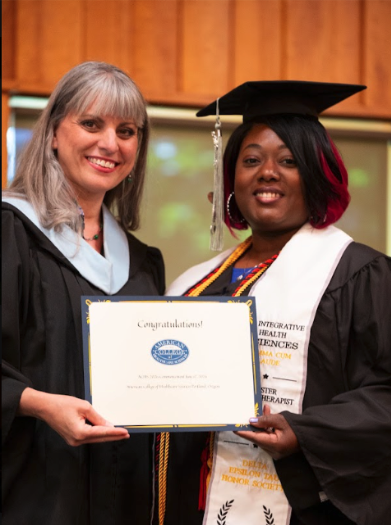 I don’t see them as opposites. Holistic practice asks us to consider the whole person: body, mind, emotions, and environment. Evidence-based practice asks us to make sure what we recommend is safe and supported. Our students learn to read research critically, respect traditional knowledge, and be honest about what the evidence does and doesn’t show. The result is a practitioner who can sit with a client holistically and still explain their choices with confidence.
How does online learning support working adults and career changers in your program?
Most of our students are balancing jobs, families, and caregiving. Online learning lets them study when their lives allow, without relocating or leaving work. It also means their classmates come from many states and countries, which brings in perspectives on plants, culture, and practice they’d never get in a single classroom. Faculty are accessible, and the hands-on labs mean students build practical skills right in their own kitchens.
What surprises students most about the study of aromatherapy?
How much science there is! Many students arrive expecting pleasant scents and relaxation, and they discover organic chemistry, pharmacology, and safety data. That can feel intimidating at first, but most come to love it, because understanding the chemistry is what lets them blend with real intention. Students are also surprised by how powerful essential oils are, and how much care safe dilution and use require.
Industry Insights & Career Pathways
How has the aromatherapy profession evolved in recent years?
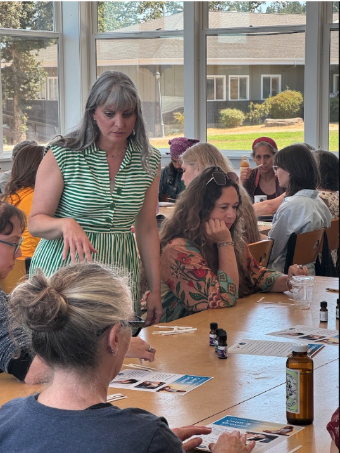 Essential oils went mainstream, and that changed everything. Far more people use them now, which is wonderful, but it also brought misinformation and safety problems from undiluted or inappropriate use. The professional community has responded by raising standards. Education requirements are more rigorous, the research base is growing, and clinical aromatherapy is showing up in hospitals, hospice, and integrative clinics. Through my work with the AIA, I see a profession that is maturing and taking its responsibility to the public seriously.
What does evidence-based aromatherapy mean in today’s wellness industry?
It means grounding our recommendations in the best available evidence: published research, essential oil chemistry, documented safety data, and careful observation of clients. It also means being honest. Some uses are well supported, some are promising, and some are traditional with little research yet. An evidence-based aromatherapist knows the difference and communicates it clearly, and never positions aromatherapy as a replacement for medical care. That honesty is what builds trust with clients and with other healthcare providers.
What trends are shaping the future of aromatherapy careers?
I see three big ones. First, integration: aromatherapy is increasingly used alongside conventional care, for example, in stress support for patients and caregivers. Second, quality and transparency: consumers want to know where their oils come from and how they were tested. Third, education as a career in itself. With so much misinformation online, people who can teach clearly and responsibly are in real demand.
What skills are becoming increasingly important for graduates entering the wellness workforce?
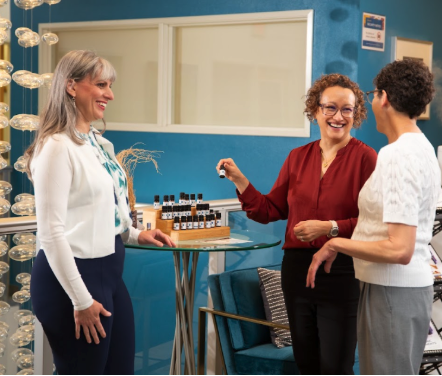 Research literacy is at the top of my list: reading a study and explaining what it does and doesn’t mean. Safety expertise, especially dilution, contraindications, and special populations, is essential. Communication matters just as much, whether you’re working with a client, collaborating with a nurse, or writing product education. And because many of our graduates build their own practices or brands, business and entrepreneurial skills make a real difference.
How do sustainability and ethical sourcing connect to aromatherapy education and practice?
Directly. Every essential oil starts as a plant, and some aromatic plants are overharvested or at risk. It can take an enormous amount of plant material to produce a small bottle of oil, so how we use essential oils matters. We teach students to ask where an oil comes from, how it was grown and distilled, and whether the people producing it are treated fairly. ACHS is a member of IFEAT (the International Federation of Essential Oils and Aroma Trades), a Certified B Corporation, and we encourage certified organic oils when possible. Using lower effective doses is a sustainability practice, too.
What emerging career opportunities are you seeing within the industry?
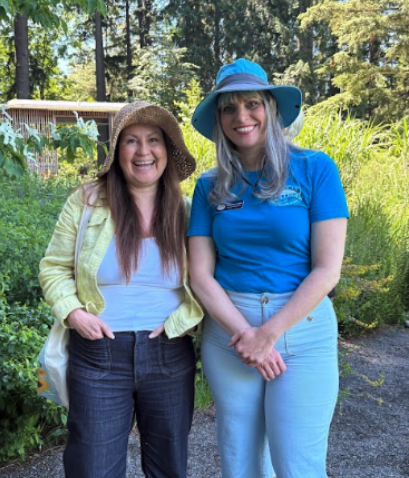 There is no license to practice aromatherapy in the United States, so our graduates build careers in many directions, and professional credentials like Registered Aromatherapist status help them stand out. I see graduates in private consulting practice, in clinical and hospice settings alongside licensed professionals, and in spa and wellness program development. Others work in natural product formulation, quality and safety roles, retail and brand education, and teaching. Healthcare professionals such as nurses and massage therapists are also adding aromatherapy to the scope of practice they already engage in.
Advice for Students & Future Professionals
What advice would you give someone considering a career in aromatherapy or integrative wellness?
Start with your “why,” then picture the work you want to do day to day. Aromatherapy careers look very different from one another: a clinical consultant, a product formulator, and an educator need different skills. Talk to people doing that work, take an introductory course to test your interest, and choose an accredited program that prepares you for professional credentials.
How important are networking, mentorship, and professional communities in this field?
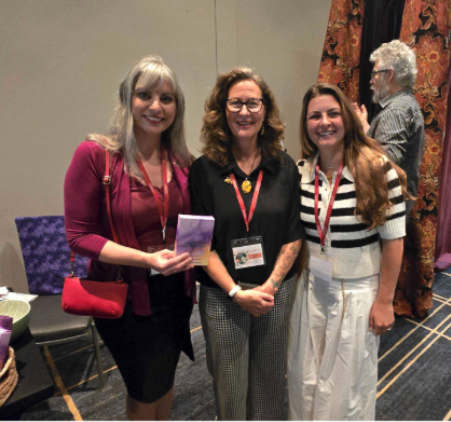 Very. Because aromatherapy isn’t licensed, professional organizations like the AIA and NAHA are where standards, research, and ethics take shape, and where you meet the people who will refer clients to you or hire you. Mentors help you avoid mistakes and see paths you didn’t know existed. Volunteering for a conference or a committee is one of the fastest ways to build relationships. I’ve gained so much from these communities, and I encourage every student to join one while they’re still in school.
What can students start doing now to strengthen their career readiness before graduation?
Treat your coursework as the start of your portfolio. Save your best case studies, formulas, and research papers. Join a professional association at the student level, and start reading research regularly. Practice explaining aromatherapy clearly and responsibly to friends and family. If you plan to sit for the Registered Aromatherapist exam, build that into your timeline now. And use ACHS’s career services and faculty office hours; we’re here to help you plan.
Looking Ahead
How do you see the wellness industry evolving over the next 5–10 years?
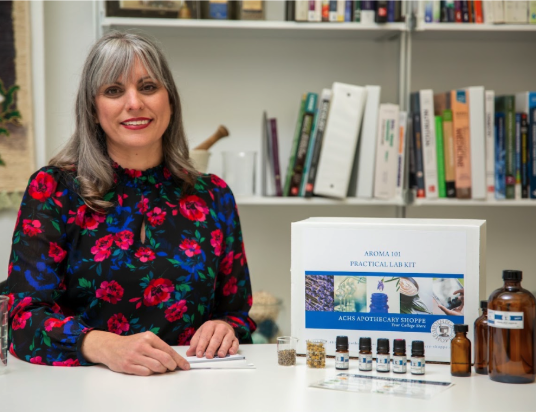 I expect more integration and more accountability. Patients increasingly want care that includes complementary approaches, and health systems are paying attention. That will push the wellness industry toward stronger education standards, better research, and clearer professional roles. I also expect consumers to keep demanding transparency about ingredients, sourcing, and claims. Practitioners and brands that can back up their claims will lead.
Quick Wellness Round
What wellness practice do you personally prioritize in your daily life?
Daily breathing exercises and aromatherapy massage over the chest, neck, and shoulders
If you could give one piece of advice to future ACHS students, what would it be?
Stay curious. In aromatherapy, there is always something new to learn, from a new study to a plant you’ve never worked with. Ask questions, check your sources, and let your curiosity carry you through the hard chapters. It’s what will keep you growing long after graduation.
Explore Aromatherapy at ACHS
Ready to explore career pathways in aromatherapy? Learn more about ACHS online degree and certificate programs, student support services, and career resources at ACHS.edu.