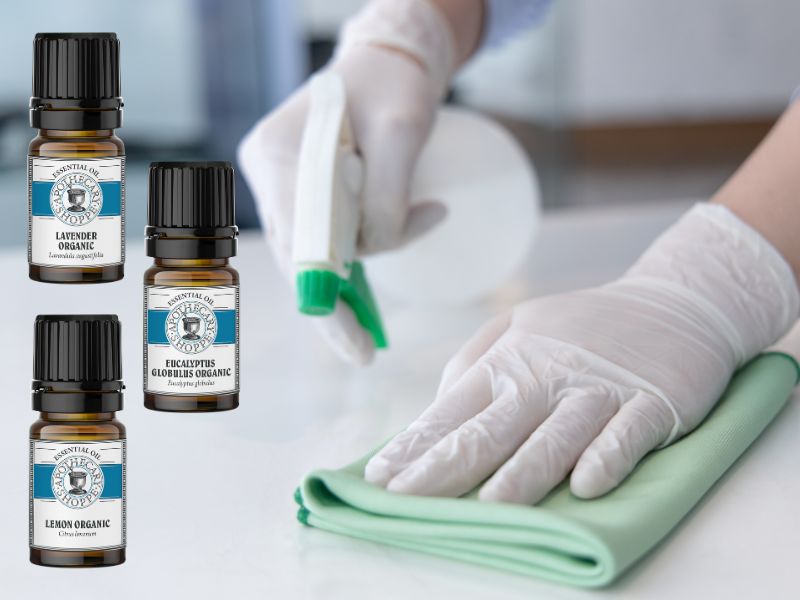
Converted from a presentation given by ACHS Dean of Aromatherapy, Amanda Lattin, BA, MAT, Dip. Aroma., MH, RA
Key Takeaways:
- Choose the right ingredients: Vinegar, citric acid, baking soda, and alcohol each have different cleaning properties and uses in DIY household formulations.
- Create aromatic cleaning blends: Essential oils and herbal-infused vinegars can add natural fragrance to homemade surface cleaners and other household products.
- Prioritize essential oil safety: Dilute essential oils appropriately, research individual oils, label formulations, and store products safely away from children and pets.
- Use recipes for their intended purpose: Household cleaners are not automatically disinfectants or sanitizers. Choose properly tested products when specific antimicrobial performance is needed.
- Protect surfaces and skin: Test cleaners on inconspicuous areas, avoid mixing incompatible chemicals, and use only appropriately formulated products for personal care.
Looking for natural ways to clean your home and freshen your everyday routines? Aromatherapy can be incorporated into DIY cleaning products using essential oils, botanical ingredients, and common household cleaning agents such as vinegar, alcohol, citric acid, and baking soda.
Essential oils are highly concentrated plant extracts. When properly selected and formulated, they can add aromatic properties to homemade cleaning products and complement simple household ingredients.
In this guide, explore DIY recipes for natural surface cleaners, infused vinegars, hand cleansers, cleansing blends, and aromatic spritzers, along with essential oil safety tips.
Common Natural Cleaning Ingredients
Many DIY cleaning recipes rely on simple ingredients already found in the home.
White Vinegar
White vinegar contains acetic acid, which gives it its characteristic acidity and makes it useful for a variety of household cleaning applications.
Vinegar can also be infused with aromatic herbs or combined with essential oils for a naturally scented cleaning solution.
 Citric Acid
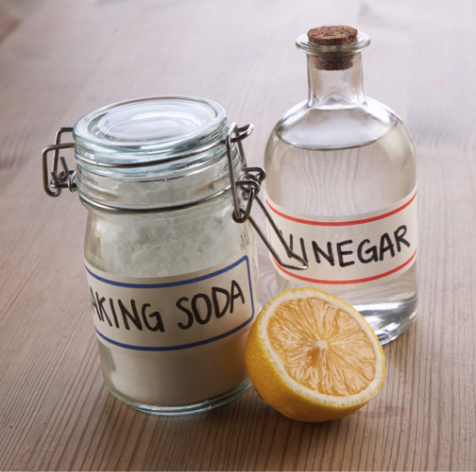
Citric acid occurs naturally in citrus fruits such as lemons. It is commonly used in household cleaning formulations and can be particularly useful for addressing mineral deposits and buildup.
Isopropyl Alcohol
Isopropyl alcohol, commonly called rubbing alcohol, is frequently used in household cleaning products. Higher-concentration alcohol can also be incorporated into certain DIY formulations.
Always follow appropriate safety precautions when working with alcohol. Keep formulations away from flames and heat, and never mix rubbing alcohol with bleach or other incompatible chemicals.
Baking Soda
Baking soda, or sodium bicarbonate, is a versatile household ingredient often used in cleaning and deodorizing applications.
Because baking soda is alkaline while vinegar is acidic, combining them produces a chemical reaction that releases carbon dioxide. For many cleaning applications, it is more useful to use these ingredients separately rather than mixing them together and expecting both to retain their original cleaning properties.
DIY Essential Oil Cleaning Recipes
1. Herbal-Infused Vinegars
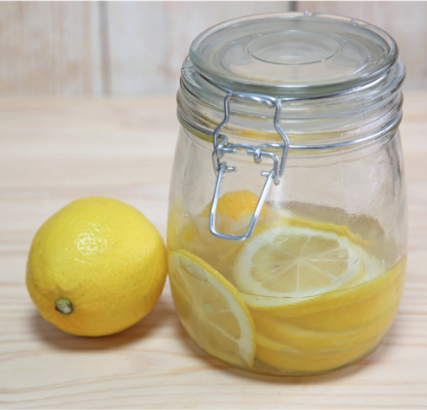 Infusing vinegar with herbs and aromatic plants is a simple way to create a naturally scented household cleaning ingredient.
Try experimenting with combinations such as:
- Lavender and Lemon
- Rosemary and Lime
- Thyme and Mandarin
- Basil and Grapefruit
Infused vinegars can be incorporated into household cleaning routines where vinegar is an appropriate ingredient.
Tip: Label your infused vinegar clearly and store it in a suitable container (such as a glass bottle or food-grade plastic bottle). Do not use vinegar-based products on surfaces that can be damaged by acids, such as certain natural stones.
Shop premium-quality essential oils from the Apothecary Shoppe, official ACHS retail store.
2. DIY Surface Cleaning Spray or Wipes
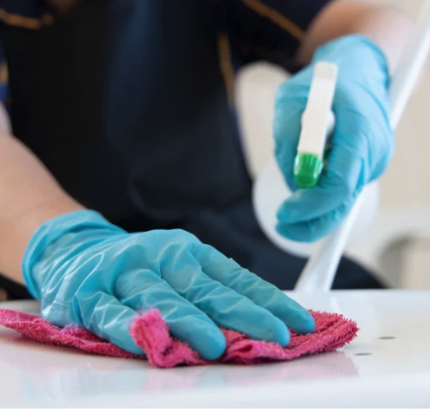 This formulation combines isopropyl alcohol, water or hydrosol, vinegar, and essential oils.
Ingredients
- ⅔ cup 90% isopropyl alcohol
- ⅓ cup boiled and cooled water or hydrosol
- ⅓ cup white vinegar, which may be infused
- 60 drops (approximately 2 mL) essential oil or essential oil blend
To Make a Surface Spray
Combine the ingredients in an appropriate spray bottle and shake gently before use.
Spray the solution onto the desired surface. Allow it to remain on the surface for approximately 10–30 seconds, then wipe with a clean cloth or paper towel.
Always test a small, inconspicuous area first to make sure the formulation is compatible with the surface.
To Make Cleaning Wipes
Place paper towels in a glass or suitable plastic container with a secure lid. Saturate the towels with the cleaning solution and keep the container sealed between uses. Store alcohol-containing formulations away from heat, sparks, and open flames.
Essential Oil Blends for Cleaning
Essential oils can be combined to create aromatic blends for DIY household formulations.
1. Sanitizing Essential Oil Blend
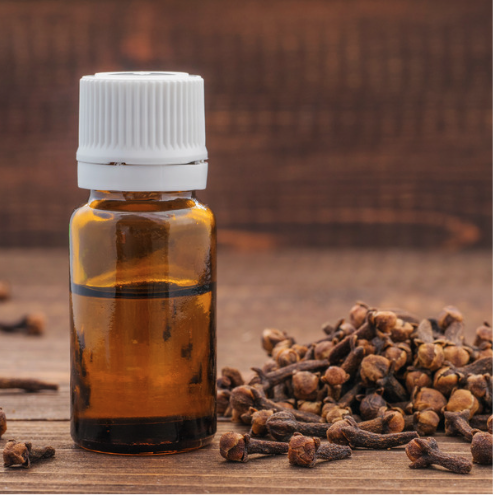 For an aromatic essential oil blend, combine these essential oils:
- 40 drops clove Syzygium aromaticum
- 24 drops eucalyptus smithii Eucalyptus smithii
- 24 drops eucalyptus globulus Eucalyptus globulus
- 40 drops rosemary Rosmarinus officinalis
- 14 drops carrot seed Daucus carota
Add 60 drops of the finished essential oil blend to the surface spray or wipe formulation above.
Safety note: Cinnamon bark essential oil is particularly potent and may cause skin irritation or sensitization if improperly diluted. Avoid using this blend directly on the skin.
The term “sanitizing” should not be interpreted as a claim that the DIY formulation has been tested or registered as a sanitizer. For regulated antimicrobial claims, rely on appropriately tested products and follow their labels.
2. Clearing & Cleansing Essential Oil Blend
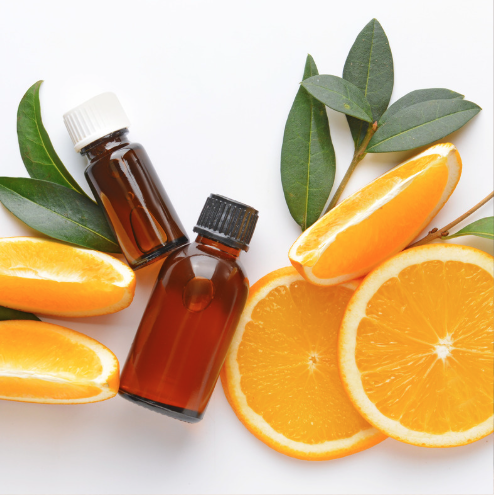 For a fresh, herbaceous aromatic profile, combine these essential oils:
- 40 drops sweet orange Citrus sinensis
- 15 drops black pepper Piper nigrum
- 10 drops clove Syzygium aromaticum
- 10 drops oregano Origanum vulgare
- 10 drops elemi Canarium luzonicum
- 10 drops summer savory Satureja hortensis
This blend can be incorporated into an appropriate household cleaning formulation.
Essential Oil Blends for Personal Aromatherapy
Not every essential oil blend needs to be used as a cleaning product. Aromatherapy can also be incorporated into personal-care routines through appropriately diluted topical formulations.
DIY Hand Cleanser With Essential Oils
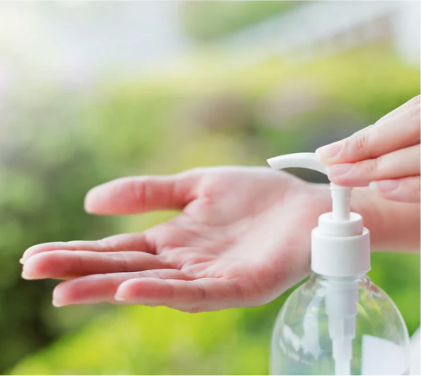 When formulating a hand cleanser, the concentration and ingredients matter. Alcohol-based hand sanitizers intended to reduce germs on the hands are regulated products, so a homemade formula should not be presented as equivalent to a commercially tested hand sanitizer.
For general aromatherapy and cleansing purposes, a basic formula includes:
Ingredients
- ⅔ cup 90% isopropyl alcohol
- ⅓ cup aloe vera gel or glycerin
- 30 drops essential oil or essential oil blend (approximately 0.5% dilution)
- A bottle with a pump cap
The recipe makes enough for approximately four 20-ounce bottles.
For hand hygiene: When soap and water are available, washing your hands thoroughly remains an important first-line practice. If you are specifically looking for a hand sanitizer, choose a commercially manufactured product formulated and labeled for that purpose.
1. Spice Is Nice Blend
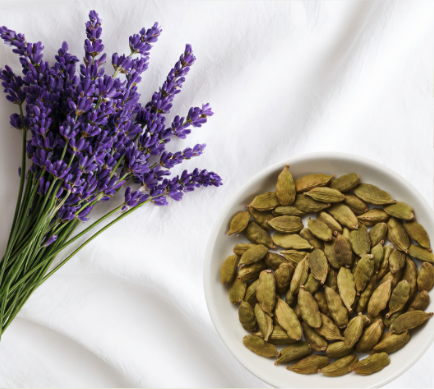 Combine these essential oils:
- 40 drops lavender Lavandula angustifolia
- 30 drops cardamom Elettaria cardamomum
- 10 drops cajuput Melaleuca leucadendron var. cajuputi
- 8 drops rosemary Rosmarinus officinalis
- 5 drops niaouli Melaleuca quinquenervia
Because essential oils are concentrated, use an appropriate dilution and formulation method when applying any blend to the skin.
2. Lavender and Tea Tree Face Mask Spritzer
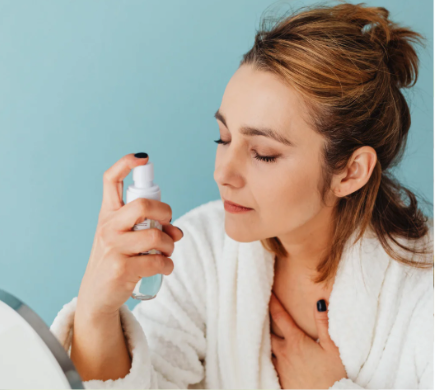 For an aromatic facial spritzer, combine:
- 20 drops lavender Lavandula angustifolia essential oil
- 20 drops Australian tea tree Melaleuca alternifolia essential oil
- 3 oz isopropyl alcohol or vodka
- 1 oz lavender hydrosol or another suitable hydrosol
The original formulation uses approximately a 1% essential oil dilution.
Before applying any essential oil-containing product to the face, consider individual skin sensitivity and perform an appropriate patch test. Avoid the eyes and mucous membranes.
Essential Oil Safety for DIY Cleaning Recipes
Essential oils are natural, but natural does not automatically mean risk-free. They are concentrated substances that require appropriate handling.
Keep these guidelines in mind when making DIY aromatherapy products:
- Dilute essential oils appropriately for their intended use.
- Do not apply cleaning products to your skin unless they have been specifically formulated for topical use.
- Keep essential oils away from the eyes and mucous membranes.
- Test cleaning products on an inconspicuous area before applying them to a larger surface.
- Label every DIY formulation with its ingredients and date of preparation.
- Store products safely, particularly those containing alcohol or essential oils.
- Keep formulations away from children and pets.
- Do not mix household chemicals indiscriminately. In particular, never combine bleach with acids such as vinegar or with ammonia.
- Research individual essential oils before using them, as some oils have specific dermal, phototoxicity, respiratory, pregnancy, medication, or other safety considerations.
- Use appropriate ventilation when working with concentrated essential oils or strong cleaning ingredients.
Important: These recipes are intended for general household cleaning and personal-care purposes. A DIY aromatherapy cleaner should not automatically be considered a disinfectant, sanitizer, or antimicrobial treatment. If you need a product that makes a specific antimicrobial claim, use a properly tested and appropriately registered product according to its label directions.
Aromatherapy Education at ACHS
At ACHS, aromatherapy education combines traditional botanical knowledge with evidence-informed science and practical application. Whether you’re interested in essential oil safety, botanical ingredients, formulation, or professional aromatherapy, education can help you develop a stronger foundation for using these tools responsibly.
Interested in learning more about essential oils, aromatherapy, and holistic health?
- Explore Aromatherapy Programs at ACHS
- Take the Certified Aromatherapy Safety Professional Program (CASP)™ Micro-Course
- Speak to an Advisor
- Request More Information
Frequently Asked Questions
Can essential oils be used to clean your home?
Essential oils can be incorporated into DIY household cleaning formulations primarily for their aromatic properties and as one component of a broader formulation. However, the presence of essential oils does not automatically make a product a disinfectant or sanitizer.
What essential oils are commonly used in natural cleaning recipes?
Lavender, lemon, rosemary, eucalyptus, tea tree, bergamot, clove, cinnamon, oregano, and other essential oils are commonly incorporated into aromatic cleaning formulations.
Each essential oil has different chemical constituents and safety considerations, so oils should be selected and diluted appropriately for their intended application.
Does vinegar disinfect surfaces?
Vinegar is a useful household cleaning ingredient, but it should not automatically be considered an EPA-registered disinfectant. If you need to disinfect a surface against a specific pathogen, use a product that has been tested and labeled for that purpose.
Can I mix vinegar and essential oils?
Essential oils can be incorporated into vinegar-based formulations, but essential oils do not dissolve in vinegar simply because they are mixed together. Proper formulation and agitation are important for creating a more consistent product.
Can I use essential oils directly on my hands?
Essential oils are highly concentrated and generally should not be applied directly to the skin. For topical use, they should be appropriately diluted in a suitable carrier or formulated product.
Can I use essential oils in homemade hand sanitizer?
Essential oils can add aroma to a hand-care formulation, but they should not be relied upon to turn a homemade mixture into an effective hand sanitizer. For hand sanitization, use a commercially manufactured product formulated and labeled for that purpose, particularly when soap and water are unavailable.
Are essential oils safe for cleaning around pets?
Not necessarily. Some essential oils may pose risks to animals, and sensitivity varies by species. If pets are present in your home, research the safety of individual oils and use caution with concentrated essential oils and diffused or sprayed products.
How should I store homemade cleaning products?
Store DIY cleaning products in appropriately labeled, sealed containers away from heat, direct sunlight, children, and pets. Alcohol-containing formulations are flammable and should be kept away from flames, sparks, and other ignition sources.
Where can I learn more about essential oil safety?
ACHS provides educational resources covering essential oil safety, aromatherapy, and evidence-informed approaches to botanical wellness. Learning about essential oil chemistry, dilution, contraindications, and appropriate applications can help you use essential oils more responsibly.
This content is for educational purposes only and is not intended to be medical advice. Always use herbs and essential oils with caution and keep out of reach of children. Use particular caution when pregnant or nursing. Always check contraindications and think safety first! The statements herein have not been evaluated by the FDA. Products are not intended to diagnose, treat, cure, or prevent disease.