Herbal medicine continues to gain momentum as consumers, healthcare professionals, and wellness practitioners seek more integrative approaches to health and well-being. As interest in natural health grows, so does the demand for professionals with the knowledge and skills to work responsibly with medicinal plants.
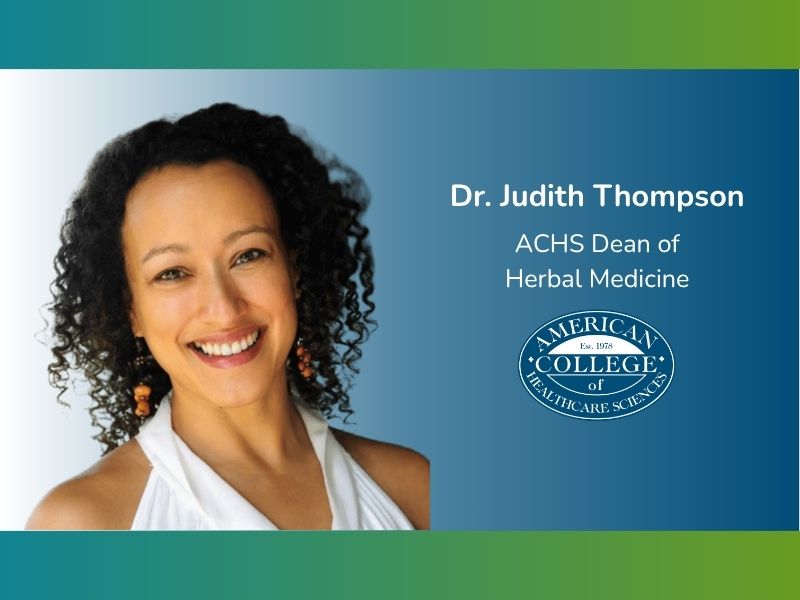
In this interview, Dr. Judith Thompson, Dean of Herbal Medicine at American College of Healthcare Sciences (ACHS), shares her perspective on the future of herbal medicine education, emerging career opportunities, sustainability, and how students can prepare for meaningful careers in the growing wellness industry.

Meet Dr. Judith Thompson
Can you share a little about your background and your role at ACHS?
I have been teaching and working in higher education since 2007. Herbs have been part of my life since childhood, but they became truly life-changing after I survived a nearly fatal car accident. The healing I experienced through herbal medicine was profound. After what I considered miraculous healing, I knew I wanted to devote my life to sharing the power of plants with others.
I joined ACHS in 2023 as a faculty member. Teaching students about the healing potential of herbs and the many ways they can be incorporated into wellness has been incredibly rewarding. As Dean of Herbal Medicine, I have the opportunity to expand students’ experiences with herbal medicine and broaden their understanding of how working with plants can be applied across a variety of professional settings.
I regularly connect with owners of herbal companies to better understand industry needs and identify where ACHS graduates can make an impact. I’m actively working to create additional internship opportunities, research projects, and mentorship programs so our herbal medicine students graduate with practical experience and confidence, regardless of which program they complete.
What first inspired your interest in herbal medicine and integrative wellness?
I grew up using herbs to treat minor ailments as part of my family’s traditions. Herbs are a normal part of daily life in Paraguay, where my family is from. After my car accident and the injuries I sustained, I turned to herbs during my recovery.
The long journey of healing physically, mentally, emotionally, and spiritually led me to integrative wellness. The accident happened shortly after I graduated from college, when I had a very different vision for my future. Realizing that path was no longer possible was emotionally difficult. I lost friendships, questioned my decisions, and spent a great deal of time reflecting on what I was meant to do with my life.
That period of quiet reflection led me to deeper conversations with God and helped me recognize that true healing happens on physical, mental, emotional, and spiritual levels. Throughout that journey, plants became my ally every step of the way.
What originally drew you to ACHS?
ACHS brought together everything I love—holistic healing, education, traditional healing practices, research, and evidence-informed approaches to wellness. The college’s commitment to sustainability and conscious stewardship made it an even better fit.
My undergraduate studies combined environmental studies, humanities, and communication, so joining ACHS felt like a natural progression of both my education and my professional experience.
What continues to keep you passionate about this work today?
Living a naturally healthy lifestyle continues to grow in popularity. More people are looking for gentle, effective solutions that support their health without unwanted side effects.
Natural remedies offer a wide range of tools, making it possible for nearly everyone to find approaches that fit their lifestyle and wellness goals. I love being part of this field, but what inspires me most is watching students grow. Many of my former students have become authors, herbalists, educators, farmers, acupuncturists, chiropractors, naturopathic physicians, osteopathic physicians, medical doctors, surgeons, and community leaders. Others have become parents and grandparents who continue passing this knowledge on to future generations.
The ACHS Student Experience
What makes the ACHS learning experience unique for herbal medicine students?
The ACHS experience is unique because students gain direct, hands-on experience with herbs. Each course includes herb kits so students can smell, touch, and examine the plants they study.
Students learn about herbal constituents, safety profiles, formulation, and preparation methods while also developing research skills and learning how to use herbs safely for themselves, their communities, and future careers.
What types of students tend to thrive in this field?
Students who thrive are naturally curious and passionate about herbs, plants, and lifelong learning. They enjoy working with their hands, exploring herbal science in depth, and helping others through natural wellness.
Many are interested in creating herbal products, working for herbal companies, educating others, writing about herbal medicine, or building careers centered around plant-based health.
How does ACHS balance traditional herbal knowledge with modern scientific research?
Students learn both the traditional uses of herbs and the current scientific research supporting their applications. We teach them to recognize patterns in how herbs work while exploring their historical use across cultures and examining the research that continues to advance our understanding today.
How does online learning support students balancing careers, families, and education?
Online learning allows students to pursue their education on a schedule that fits their lives. They can continue working, caring for their families, and immediately apply what they learn to build careers, strengthen their communities, and improve their own well-being.
What surprises students most about herbal medicine education?
Many students are surprised by the healing potential of something as simple as herbal tea. They also discover how important the senses are in herbal medicine. Learning to smell, touch, taste, and accurately identify herbs opens many doors within the herbal industry.
Industry Insights & Career Pathways
Why is herbal medicine gaining renewed attention in modern wellness conversations?
Conventional medicine has limitations, and many people are seeking additional options that support long-term wellness with fewer unwanted side effects.
Plants work through multiple mechanisms and can support complex health concerns in ways researchers are still discovering. As chronic illnesses become more common, interest in herbal medicine continues to grow.
What trends are shaping the future of herbal education and wellness careers?
More people want to learn how to care for themselves and their families using natural remedies. Parents are especially seeking non-toxic approaches to everyday wellness.
Interest in natural health continues to exceed many industry projections, creating exciting opportunities for trained herbal professionals.
What misconceptions do people often have about careers in herbal medicine?
Many people don’t realize just how many career opportunities exist within herbal medicine or how much preparation is required to succeed. The industry is growing rapidly, offering diverse career paths that require specialized knowledge depending on one’s professional goals.
Why are sustainability and plant stewardship important in herbal education?
Climate change is placing increasing stress on medicinal plants. We don’t yet know how many species will adapt or how they may change over time.
Protecting medicinal plants through sustainable cultivation, ethical harvesting, and ongoing research is becoming increasingly important because these plants support food systems, healthcare, scientific research, and ecosystems worldwide.
What skills are becoming increasingly important for graduates entering the wellness industry?
Communication is essential. As healthcare and technology become more complex, professionals must communicate clearly with clients, colleagues, and the public.
Understanding how to use artificial intelligence effectively is also becoming an important skill. AI can help support research, sustainable cultivation, quality assessment, and informed decision-making across the herbal industry.
What opportunities are emerging for professionals trained in herbal medicine?
Graduates can pursue careers as health coaches in clinical settings, land stewards, eco-tour guides, researchers, public health professionals, community educators, mobile clinic practitioners, and much more.

Advice for Students & Future Professionals
What advice would you give someone considering a career in herbal medicine or integrative wellness?
If you’re interested in herbs and want to build a career around plant knowledge, now is an excellent time to enter the field.
Demand is growing for professionals who understand plant quality, herbal research, product development, and science-based communication. More people are recognizing the value of herbal medicine and are looking for qualified professionals to help them make informed health decisions.
How important are mentorship, networking, and professional communities in this field?
They are valuable throughout every stage of professional growth.
Mentorship builds confidence and practical skills. Networking begins as soon as students start classes and often continues throughout their careers, creating opportunities for collaboration and employment.
At ACHS, students benefit from growing partnerships with organizations like Herbalists Without Borders, the American Herbal Pharmacopoeia, and industry leaders such as Eclectic Herb.
What can students do today to strengthen their professional readiness before graduation?
Seek out mentorships and internships that provide hands-on experience with herbs, client interactions, or the day-to-day operations of herbal businesses. Practical experience builds confidence and prepares students for success after graduation.
Looking Ahead
How do you see herbal medicine evolving over the next five to ten years?
I expect to see greater integration of AI to improve sustainable cultivation and production practices. I also believe there will be increased demand for professionals who understand plant stewardship, quality assessment, regulatory compliance, and sustainable sourcing.
What excites you most about the future of integrative health education?
This field is expanding beyond traditional practitioner roles. Today there are opportunities in product formulation, manufacturing, distribution, procurement, education, coaching, administration, research, and entrepreneurship.
We’re experiencing a renaissance in natural medicine that is creating exciting career possibilities across many sectors.
Where do you believe herbal medicine education is headed in the future?
Herbal medicine education is evolving to prepare practitioners, formulators, producers, educators, marketers, business owners, quality assurance specialists, and many other professionals. It’s an ancient field that continues to grow and adapt alongside modern science and technology.
Quick Wellness Round
What wellness practice do you personally prioritize?
Hydrotherapy, eating greens every day, and strength training to maintain muscle mass and mobility.
Is there a book, philosophy, or mentor that has influenced your work?
Dr. James Sensenig, Dr. Jared Zeff, the Eclectic physicians of the 1800s, Dr. Bastyr, Dr. Lust, Louise Hay, Barbara Marx Hubbard, Samuel Hahnemann, Stephen Buhner, James Duke, Dr. Christiane Northrup, The Organon of Medicine, the philosophy of vitalism, and the Bible.
What’s something students may be surprised to learn about you?
I have witnessed what many people would call miracles. I’ve seen remarkable healing occur in people of all ages, from newborns to seniors. Those experiences have strengthened my belief in the principles and practice of vitalism.
If you could give one piece of advice to future ACHS students, what would it be?
If you feel drawn to ACHS, trust that feeling. It reflects a deeper purpose that has the potential to positively impact many lives. Don’t wait to pursue that calling—there are people whose lives may be changed by the knowledge and care you’ll one day provide.
Explore Herbal Medicine at ACHS
Interested in turning your passion for plants into a meaningful career? Explore the online Herbal Medicine programs at American College of Healthcare Sciences and discover how evidence-based education, hands-on learning, and sustainability can prepare you for a rewarding future in integrative health.