If you’ve ever mixed a few drops of essential oil into something before applying it to your skin, you’ve likely already worked with a carrier oil. These often-overlooked oils do more than just “carry” essential oils to the skin — they bring their own rich chemistry and therapeutic benefits to every blend. This guide breaks down what carrier oils are, what they’re made of, how they’re classified, and how to make your own infused oils at home.
What Are Carrier Oils in Aromatherapy?
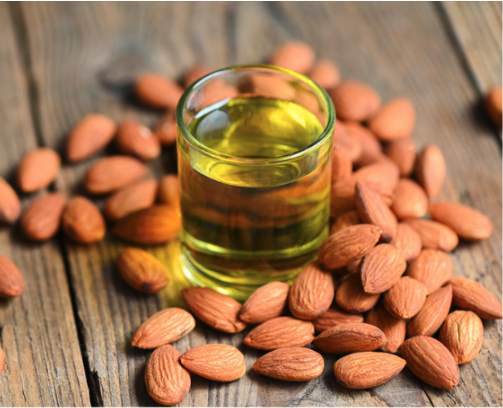 Carrier oils (also called base oils, fixed oils, or vegetable oils) are the fatty, non-volatile oils extracted from plants, nuts, seeds, or fruits that are used to dilute aromatic, volatile essential oils. Chemically, they’re lipids — made up of fatty acids, triglycerides, phytosterols, fat-soluble vitamins (A, D, E, F), and phospholipids.
Fatty acids are classified by saturation (saturated, monounsaturated, polyunsaturated) and by carbon chain length. Beyond diluting essential oils, carrier oils bring their own therapeutic properties, anti-inflammatory, emollient, nutritive, antioxidant, and wound-healing effects, among others, and can also serve as the base for infused oils.
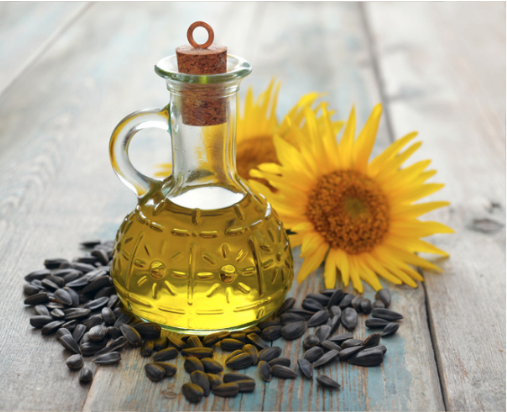 Common carrier oils include:
- Sweet Almond (Prunus amygdalus var. dulcis) oil
- Apricot (Prunus armeniaca) kernel oil
- Avocado (Persea americana) oil
- Olive (Olea europaea) oil
- Coconut (Cocos nucifera) oil
- Jojoba (Simmondsia chinensis) oil (technically a wax)
- Sunflower (Helianthus annuus) oil
- Borage (Borago officinalis) seed oil
- Hazelnut (Corylus avellana) oil
- Grapeseed (Vitis vinifera) oil
- Camellia (Camellia japonica) oil
- Sesame (Sesamum indicum) oil
- Rosehip (Rosa rubiginosa) seed oil
- Wheat germ (Triticum aestivum) oil
Carrier oils are often grouped by plant source (nut, fruit, seed/kernel, or cereal germ oils) or by their predominant fatty acid type:
- Saturated-dominant: coconut, palm, mango seed butter, shea butter
- Polyunsaturated-dominant: evening primrose, borage seed, rosehip seed
- Monounsaturated-dominant: olive, macadamia nut, avocado
A few standouts: sunflower oil is light, rich in linoleic acid, and a good budget-stretcher in blends. Olive oil is heavier, high in oleic acid, and useful for chapped or inflamed skin. Sweet almond oil is light, easily absorbed, and one of the most widely used oils in aromatherapy. Apricot kernel oil is light, nearly odorless, and gentle enough for sensitive or irritated skin.
What Are Infused Oils?
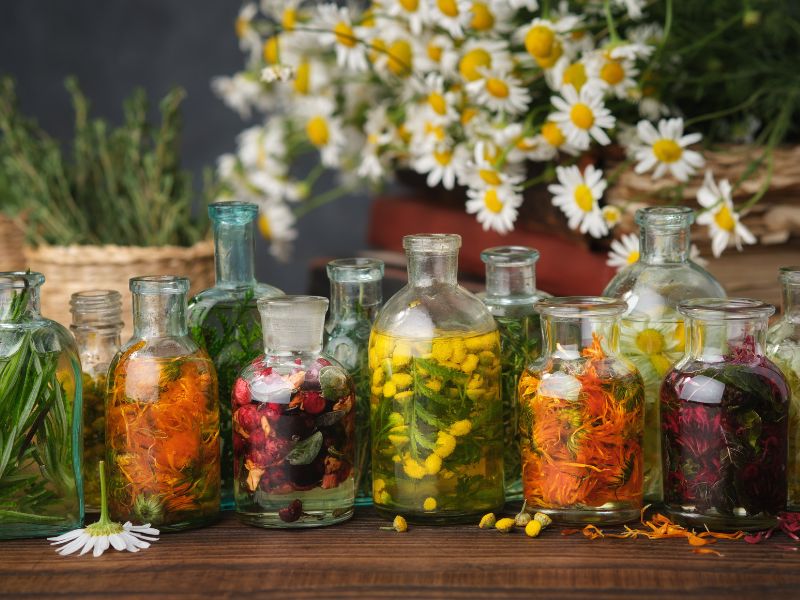
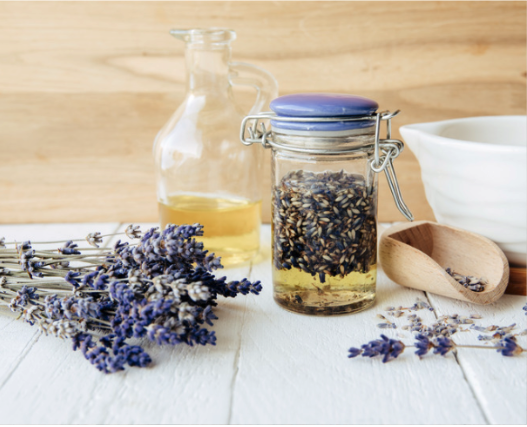 Infused oils are one of the oldest methods for extracting, preserving, and using herbs. Unlike carrier oils alone, infused oils contain essential oil constituents as well as other fat-soluble constituents drawn from the herb — making them beautiful and versatile tools in an aromatherapy practice.
Common Herbs Used for Infused Oils
- Lavender (Lavandula angustifolia)
- Rosemary (Rosmarinus officinalis)
- Arnica (Arnica montana)
- Mullein (Verbascum thapsus)
- Carrot (Daucus carota)
- Chamomile (Matricaria recutita or Chamaemelum nobile)
- St. John’s Wort (Hypericum perforatum)
- Calendula (Calendula officinalis)
How to Prepare Infused Oils: Four Methods
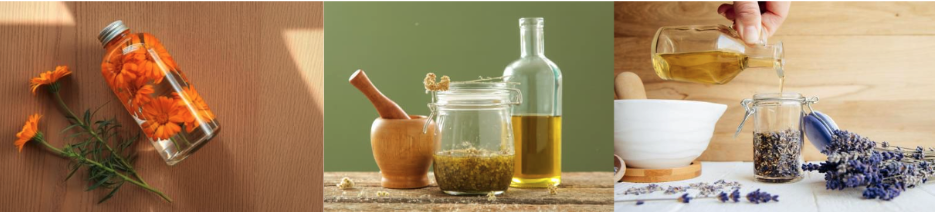
There are four traditional methods for making an infused oil: the solar method, the water bath method, the crock pot method, and the alcohol intermediary method.
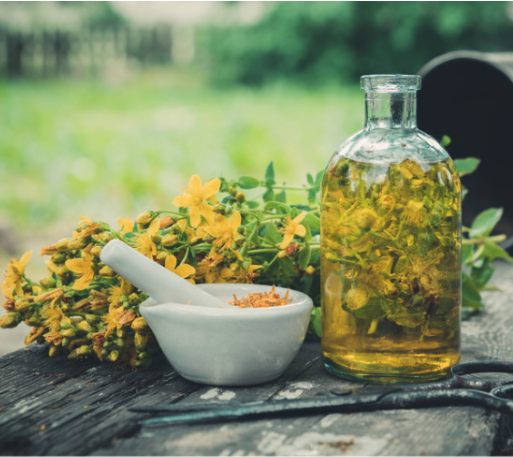 Solar Method: St. John’s Wort (Hypericum perforatum) Oil
- Base oil: 1 cup
- Dried herb or herb blend: ½ ounce, OR fresh herb: 1 ounce
- Make sure all the herb material is fully covered by the base oil, then seal the jar.
- Allow the jar to sit in a sunny spot for several weeks.
- Strain through muslin.
- Optionally, add vitamin E oil (up to 1%) to help preserve the finished infused oil.
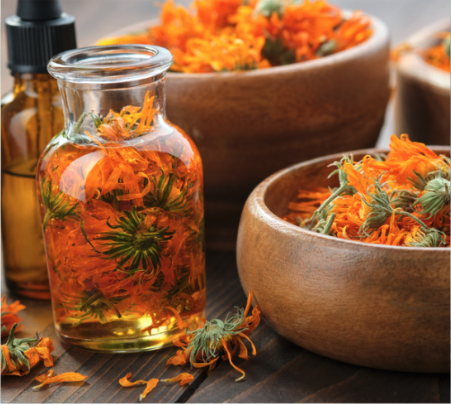 Water Bath Method: Calendula (Calendula officinalis) Oil
- Base oil: 1 cup
- Dried herb or herb blend: ½ ounce, OR fresh herb: 1 ounce
- Make sure all the herb material is fully covered by the base oil, then seal the jar.
- Allow to sit for several weeks.
- Strain through muslin.
- Optionally, add vitamin E oil (up to 1%) to help preserve the infused oil.
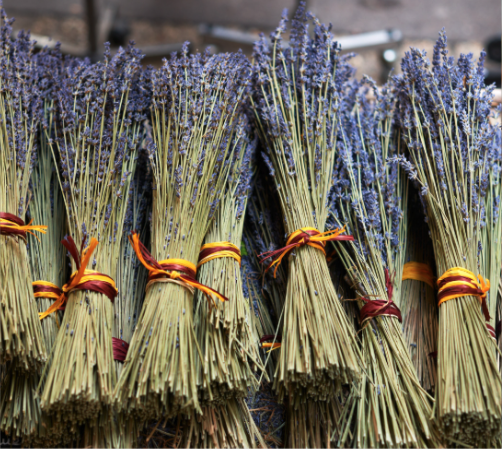 Crock Pot Method: Lavandin (Lavandula intermedia) Oil
- Combine herb material and base oil in a sealed jar, just as in the solar method.
- Add about ⅓ inch of water to the crock pot, then place the sealed jars inside.
- Set the crock pot to its lowest setting and let it run for 2 hours.
- Strain through muslin.
- Optionally, add vitamin E oil (up to 1%) as a preservative.
Two Infused Oil Blend Formulas to Try
Infused Oil Formula 1
- Rose (Rosa centifolia)
- Lavender (Lavandula angustifolia)
- Roman chamomile (Chamaemelum nobile) or German chamomile (Matricaria recutita)
- Combine equal parts of all three herbs in the carrier oil of your choice — a light oil works best.
Therapeutic actions: Anti-inflammatory, calmative, nervine, antispasmodic.
Infused Oil Formula 2
- Cleavers (Galium aparine)
- German chamomile (Matricaria recutita)
- Rosemary (Rosmarinus officinalis)
- Combine in the carrier oil of your choice — an oil with good penetration, such as apricot kernel oil, is recommended.
Therapeutic actions: Anti-inflammatory, analgesic, lymphatic system support.
 Bringing It All Together
 Bringing It All Together
Carrier oils are far more than a neutral vehicle for essential oils — their fatty acid profiles, vitamin content, and individual therapeutic properties shape the outcome of every aromatherapy blend. Whether you’re diluting essential oils for topical use or crafting your own infused oils at home using the solar, water bath, or crock pot methods, understanding the chemistry and characteristics of your base oil is a foundational skill for any aromatherapy practice.
Interested in learning more about the science of aromatherapy?
References
- Sunflower Oil Image. By torange.biz – http://torange.biz/photos/32/32723/HD32723.jpg Published on http://torange.biz/32723.html, CC BY 4.0, https://commons.wikimedia.org/w/index.php?curid=40799354
- Palmitic Acid Image. By Mrgreen71 – Own work, CC BY-SA 3.0, https://commons.wikimedia.org/w/index.php?curid=4896751
- Stearic Acid Image. Public Domain, https://commons.wikimedia.org/w/index.php?curid=2839649
- Oleic Acid Image. By Ben Mills – Own work, Public Domain, https://commons.wikimedia.org/w/index.php?curid=1495169 2
- Linoleic Acid Image. By Edgar181 at English Wikipedia – Transferred from en.wikipedia to Commons., Public Domain, https://commons.wikimedia.org/w/index.php?curid=1828429
- Alpha-linoleic Acid Image. By en:User:Edgar181 – en:Image:AI.Anumbering.png, re-drawn in BKchem+perl+inkscape+vim, Public Domain, https://commons.wikimedia.org/w/index.php?curid=2961900
- Gamma Linoleic Acid. By Edgar181 at English Wikipedia – Transferred from en.wikipedia to Commons., Public Domain, https://commons.wikimedia.org/w/index.php?curid=1828836 http://rogersal.people.cofc.edu/Lipids.pdf
- Glycerol Image. By NEUROtiker – Own work, Public Domain, https://commons.wikimedia.org/w/index.php?curid=2008348
- Beta-sitosterol Image. By User:Mysid – Self-made in BKChem + perl + vim, Public Domain, https://commons.wikimedia.org/w/index.php?curid=1779725
- Triacontanyl palmitate Image. By Smokefoot – Own work, CC BY-SA 4.0, https://commons.wikimedia.org/w/index.php?curid=23168938
- Beeswax Image. By Frank Mikley – Own work, CC BY 2.5, https://commons.wikimedia.org/w/index.php?curid=540763
- Phosphatidylcholine Image. By Jü – Own work, CC0, https://commons.wikimedia.org/w/index.php?curid=18205869
- Naturopathica. Seed Oils and Essential Fatty Acids. Retrieved from 4/4/17: https://www.naturopathica.com/system/user_files/attachments/7/original/Naturopathica_Seed_Oils.pdf
- Isomers of Oleic Acid Image. By Edgar181 – Own work, Public Domain, https://commons.wikimedia.org/w/index.php?curid=2783717
- Galium aparine Image. By H. Zell – Own work, CC BY-SA 3.0, https://commons.wikimedia.org/w/index.php?curid=10188204
- Calendula Image. By André Karwath aka Aka – Own work, CC BY-SA 2.5, https://commons.wikimedia.org/w/index.php?curid=136791
- Rosa Centifolia Image. By A. Barra – Own work, CC BY-SA 3.0, https://commons.wikimedia.org/w/index.php?curid=2776686
- Sunflower Image. By Fir0002 – Own work, GFDL 1.2, https://commons.wikimedia.org/w/index.php?curid=7613324
- Olive Image. By en:User:Nickfraser – en:Image:Olivesfromjordan.jpg, CC BY-SA 3.0, https://commons.wikimedia.org/w/index.php?curid=2208405
- Avocado Oil. By Unknown – http://web.archive.org/web/20060515202557/http://www.nass.usda.gov/fl/apfp.htm (Original link: http://www.nass.usda.gov/fl/apfp.htm), Public Domain, https://commons.wikimedia.org/w/index.php?curid=51323
- Almond Fruit Image. By antcaesar – DSC_0089, CC BY-SA 2.0, https://commons.wikimedia.org/w/index.php?curid=54274030
- Apricot Image. By Fir0002 – Own work, GFDL 1.2, https://commons.wikimedia.org/w/index.php?curid=5765345
- Wheat Image. By User:Bluemoose – Own work, CC BY-SA 3.0, https://commons.wikimedia.org/w/index.php?curid=333105
- David Hoffman. (2003). Medical Herbalism. Rochester, Healing Arts Press.
- Jan Kusmirek. (2002) Liquid Sunshine. Glastonbury, Floramics.
- Nerys Purchon and Lora Cantele. (2014) The Complete Aromatherapy and Essential Oil Handbook for Everyday Wellness. Sydney, Robert Rose.